
How to select a design build contractor: 2025 Ultimate
What Makes Design-Build Different from Traditional Remodeling
How to select a design build contractor starts with understanding what sets this approach apart. Unlike traditional methods where you hire separate architects and contractors, design-build combines both services under one contract with a single team.
Key factors to consider when selecting a design-build contractor:
- Portfolio and past experience with similar project types
- In-house design and construction capabilities
- Proven track record with long-term client relationships
- Transparent pricing and clear change order processes
- Quality assurance systems and safety protocols
- Strong references from recent clients
- Collaborative approach and communication style
This integrated approach is popular for a reason: design-build projects are completed 40-50% faster than traditional methods and typically result in 6% lower costs with 12% faster completion times compared to design-bid-build.
The design-build model creates a single point of accountability, streamlining communication and reducing conflicts. Instead of managing multiple contracts, you work with one team from concept to completion.
I’m Jeff Lexvold, and after two decades and over 1,000 home renovations, I started Tropic Renovations in 2017. My experience shows that knowing how to select a design build contractor is crucial for homeowners who want to avoid the headaches of traditional remodeling.
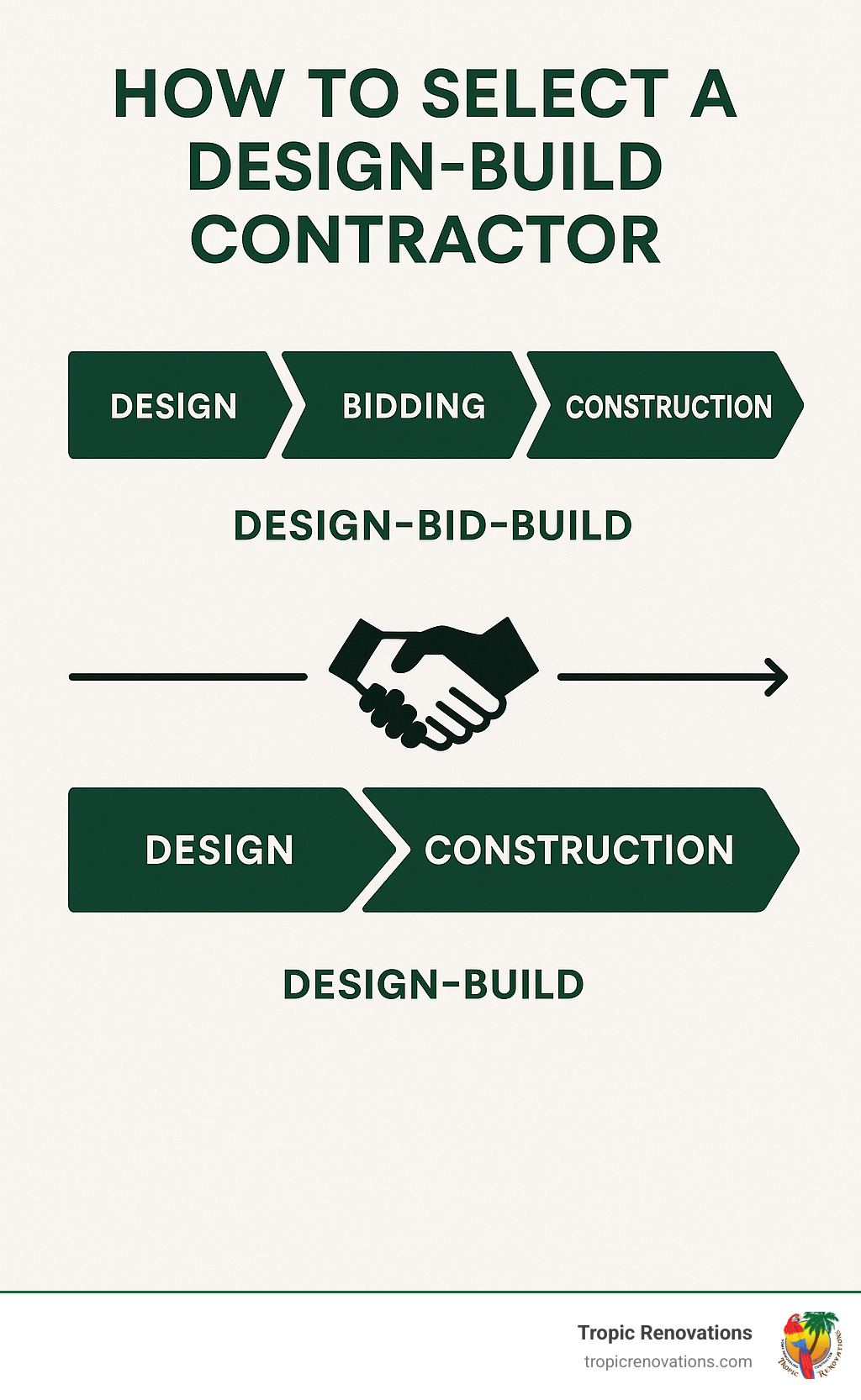
Essential how to select a design build contractor terms:
Why Choose the Design-Build Model for Your Remodel?
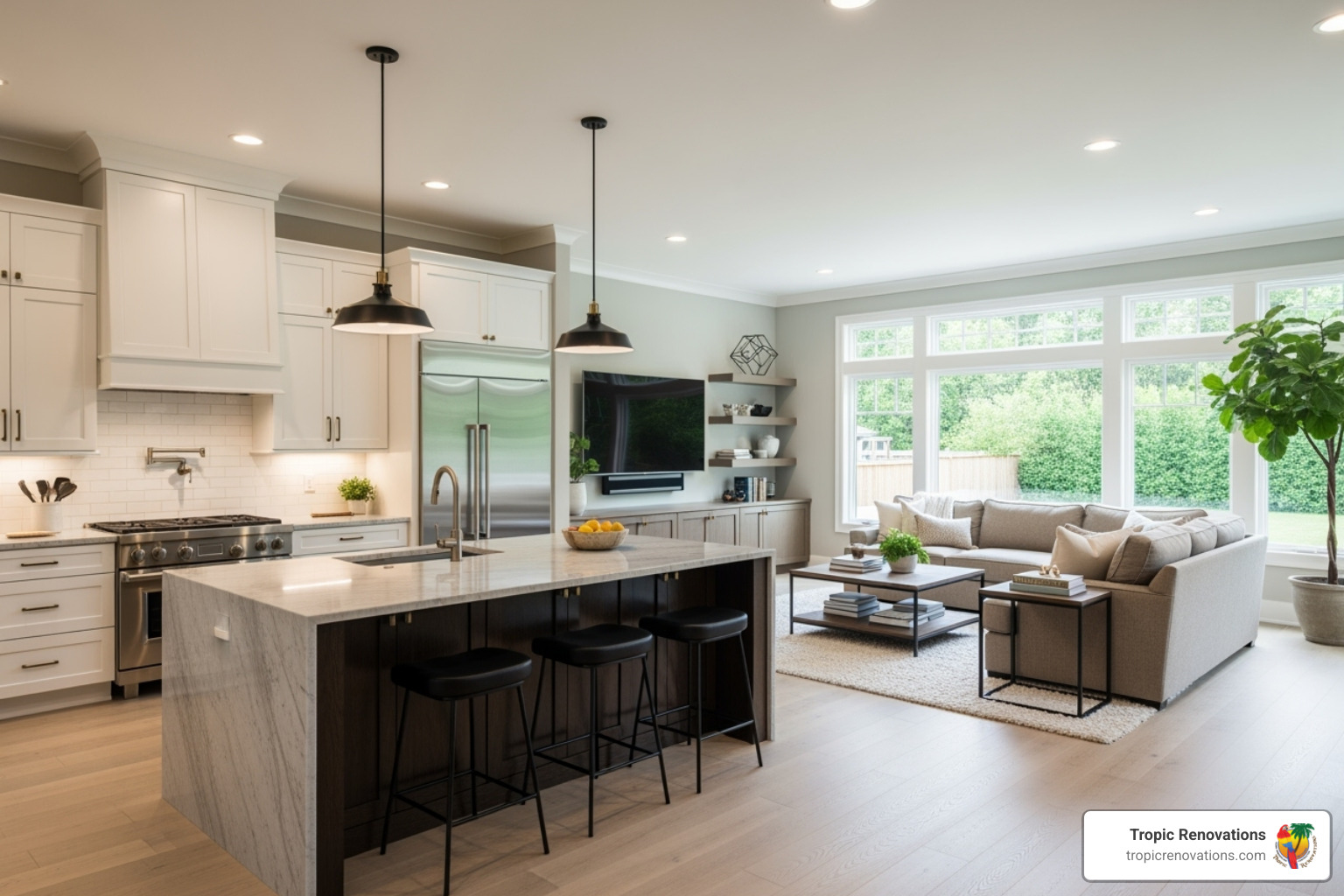
Imagine planning a major kitchen renovation in Sarasota with just one number to call instead of juggling contacts for architects and contractors. That’s the beauty of design-build. After completing hundreds of renovations, I’ve seen traditional methods create stress. Design-build avoids this by putting everything under one roof.
Single-Source Accountability
With design-build, you get single-source accountability, which eliminates the finger-pointing common in traditional remodels. One team takes responsibility for everything, from design sketches to the final walkthrough. If an issue arises, we own it and fix it—no blame games or delays. This unified approach means smoother problem-solving, as you always know who to call for immediate solutions.
Faster Project Delivery
No one wants a long construction period. Faster project delivery is a key benefit. Instead of separate design, bid, and build phases, we overlap them. Our construction team gets involved early to order materials and plan logistics while the design is finalized. This coordination can complete projects up to 40-50% faster than traditional methods, getting your life back to normal sooner.
Cost Efficiency
Design-build is often more cost-effective. Our cost efficiency comes from involving construction experts during the design phase to prevent expensive surprises. Our builders review designs to spot cost drivers and suggest value engineering alternatives that protect your budget without compromising your vision. This collaboration typically results in 6% lower project costs. We also guide you on budgeting from the start; learn more in our guide on How to Budget for Your Home Remodel with a Contractor.
Reduced Owner Risk
Traditional remodeling places risk on you to coordinate separate parties and contracts. Design-build provides reduced owner risk by shifting that responsibility to us. With one contract and one point of contact, we handle coordination, timelines, and quality control. If something goes wrong, we’re responsible. This simplifies legal protection with one clear agreement.
Improved Collaboration
The best part of design-build is the improved collaboration between our design and construction teams. Working together from day one, design decisions are informed by construction realities. This avoids beautiful but unbuildable designs. Our teams find solutions that are both gorgeous and practical, resulting in fewer change orders and a better final product.
Owner’s Role
As the homeowner, your role is more enjoyable. Instead of being a project manager, you focus on the fun part: making decisions about your dream renovation. We handle the daily coordination and keep you informed, so you’re involved in key decisions without the stress.
Ideal Project Types
Design-build excels for complex projects like kitchen and bathroom remodels, especially with structural changes. It’s also ideal for whole-home renovations and any project where speed is critical.
| Feature | Design-Build | Design-Bid-Build (DBB) | Construction Management at Risk (CMAR) |
|---|---|---|---|
| Contracts | Single contract with one entity for design and construction | Separate contracts: one for design (architect), one for construction (GC) | Separate contracts: one for design (architect), one for CM; CM then contracts with subs |
| Speed | Fastest; overlapping design and construction phases | Slowest; sequential phases (design, then bid, then build) | Moderate; CM provides early input, but design and construction are still somewhat sequential |
| Cost Certainty | High; early cost knowledge, integrated planning, reduced change orders. Often uses Guaranteed Maximum Price (GMP) | Low to Medium; final cost determined after bids are received, potential for cost overruns due to design errors or change orders | Medium to High; CM provides cost estimates early, but final cost can fluctuate. Often uses GMP |
| Owner Risk | Low; single point of accountability, risk shifted to design-builder | High; owner manages risk between separate design and construction entities, potential for disputes | Moderate; CM acts as owner’s advisor, shares some risk, but owner still holds design contract |
Understanding how to select a design build contractor means recognizing these advantages and finding a team that can deliver on them. The integrated approach isn’t just about convenience—it’s about creating better outcomes for your home.
The Ultimate Guide on How to Select a Design-Build Contractor
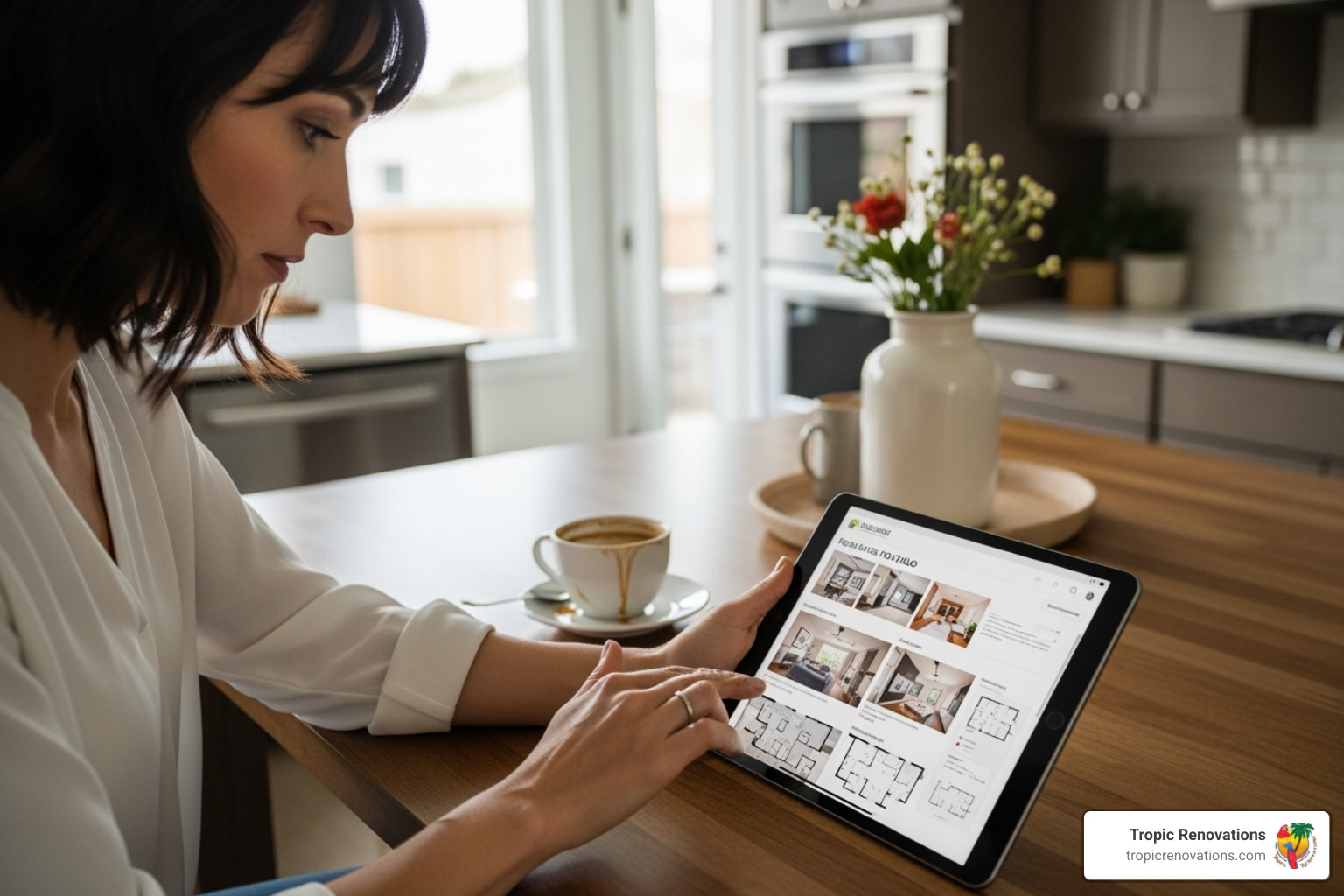
Now that you’ve chosen design-build for your Sarasota or Charlotte County remodel, it’s time to find the right partner. Knowing how to select a design build contractor is key to avoiding a costly nightmare. At Tropic Renovations, we advocate for a qualifications-based selection. Focusing only on the lowest bid is risky; you want proven expertise and happy clients. The right contractor will prioritize past performance over price and welcome your vetting process. This due diligence is essential, as your choice impacts the final result and your entire experience.
Step 1: Researching Experience and Credentials
Before scheduling a meeting, do your homework to create a shortlist of qualified candidates.
- Portfolio Review: Look beyond pretty pictures for evidence of quality craftsmanship, attention to detail, and a design style that aligns with your vision. As construction portfolio experts note in Tips to Highlight Your Construction Portfolio, a portfolio is a client’s first impression.
- Relevant Project Experience: Ensure they have experience with projects similar to yours in the Sarasota and Charlotte County area. Local experience is vital for navigating unique building codes and permit processes.
- Licensing and Insurance: This is non-negotiable. Verify they hold a valid Florida state license and carry both workers’ compensation and liability insurance. Ask for documentation. For more on this, see Do I Need a Contractor’s License to Remodel Homes?
- Reviews and References: Check online reviews and testimonials for consistent themes in client feedback. Most importantly, ask for client references and call them. A quality contractor will happily provide them.
- Industry Certifications: Look for certifications from groups like the Design-Build Institute of America (DBIA) or the National Association of Home Builders (NAHB), which show a commitment to best practices.
Step 2: The Interview – Critical Questions to Ask
The interview is your chance to assess expertise and chemistry. Here are key topics to cover:
- Communication and Project Management: How often will they update you, and who is your primary contact? Clear, consistent communication is vital. See our approach on our Meet the Team page.
- Team Structure: Do they have in-house designers and builders, or do they outsource? This helps you gauge how integrated their team is.
- Subcontractor Use: At Tropic Renovations, we don’t subcontract core trades. If a firm does, ask how they vet partners and ensure quality control.
- Budgeting and Cost Controls: Request a detailed estimate. Ask how they handle unexpected costs and their approach to value engineering (optimizing costs without sacrificing quality).
- Change Order Process: Changes happen. Understand their process for handling them to avoid disputes. Look for clear, transparent procedures.
- Timelines and Scheduling: Get realistic expectations for how long your project will take and what might cause delays.
- Warranty Details: Understand what’s covered, for how long, and the terms. A solid warranty shows confidence in their work.
For more questions, see this resource: Questions to Ask Design/Build Contractors and Their References.
Step 3: Spotting Red Flags Before You Sign
Knowing how to select a design build contractor also means knowing what to avoid. Watch out for these warning signs:
- Vague Answers: A professional should be able to clearly explain their process, costs, and timelines.
- Lack of Transparency: Reluctance to show past work, provide detailed contracts, or prove licensing is a major issue.
- High-Pressure Sales Tactics: Reputable contractors give you time to make an informed decision.
- Overemphasis on Low Price: A significantly low bid often means corners will be cut on materials, labor, or permits.
- Poor Communication: If they’re slow to respond or unclear now, it will likely get worse during construction.
- No Written Contract: Never proceed with only a verbal agreement. A detailed written contract is essential.
- Incomplete Portfolio: A lack of relevant work samples suggests they may not have the right experience.
- Unwillingness to Provide References: This is one of the biggest red flags. A proud contractor will gladly connect you with past clients.
Understanding the Contract and Ensuring Project Success
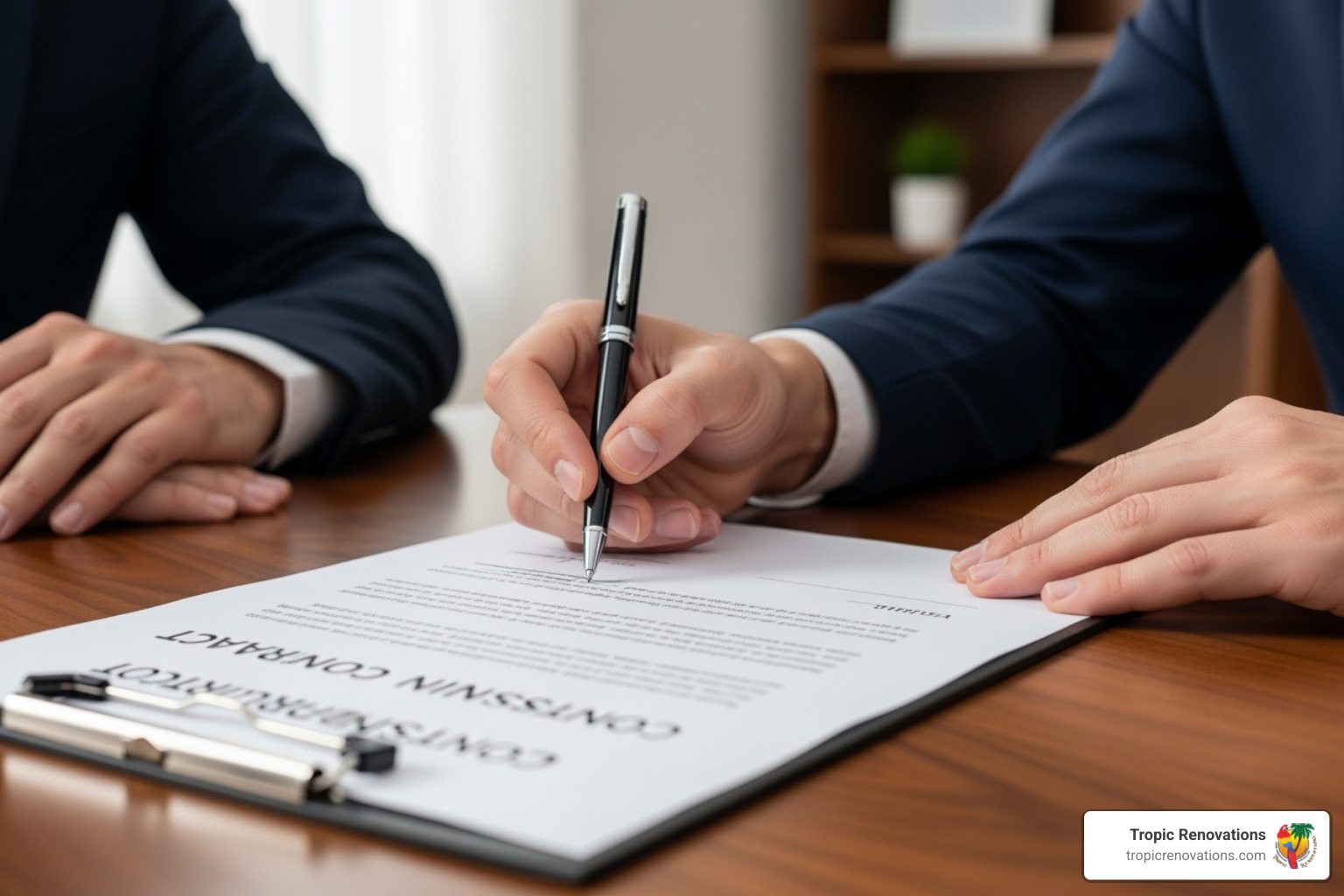
After finding the right design-build partner, the next step is the contract. This document is your project’s roadmap, protecting both you and the contractor by setting clear expectations. At Tropic Renovations, we ensure transparency by walking clients through every detail. A solid contract is a key part of knowing how to select a design build contractor. It should define material specifications, outline value engineering (smart cost-saving, not corner-cutting), and protect your design integrity. For more tips, see our guide on How to Negotiate with Contractors for Home Remodeling.
Debunking Common Myths About Design-Build
Despite its growing popularity, some misconceptions about design-build persist. Let’s clear them up.
- Myth: You lose control of your project. Reality: You gain a collaborative partnership. You’re more involved in key decisions, not less. You focus on approvals and input while the team handles the complex daily coordination.
- Myth: Design quality suffers. Reality: You get integrated, practical design. When designers and builders collaborate from the start, you get spaces that are both beautiful and functional. The creative vision is improved by real-world construction knowledge.
- Myth: There’s no competitive pricing. Reality: Bidding happens at the subcontractor level. Your design-build contractor gets competitive bids from qualified subcontractors and suppliers, ensuring you get fair market pricing for every component.
- Myth: It’s only for huge projects. Reality: It’s perfectly scalable for home remodels. The benefits of streamlined communication and single-point accountability apply to projects of all sizes, from a powder room to a whole-home renovation.
Key Components of a Design-Build Contract
A comprehensive contract should clearly spell out every important aspect of your renovation. Look for these key components:
- Detailed Scope of Work: This is the heart of the contract, describing exactly what will be done, including specific materials and finishes. If it’s not in the scope, it’s not included.
- Performance Standards: This defines the quality level you can expect for materials, workmanship, and system performance.
- Pricing Structure: Most residential remodels use a fixed price for cost certainty. Larger projects might use a Guaranteed Maximum Price (GMP) to cap costs.
- Allowances: These are budget amounts for items you haven’t selected yet (like fixtures or tile). The contract should explain how they work.
- Change Order Process: Your contract must outline how modifications will be priced, approved, and how they’ll affect the timeline.
- Project Schedule: A clear timeline with start dates, end dates, and key milestones keeps everyone accountable.
- Payment Terms: Payments should be tied to completed milestones, not arbitrary dates. Avoid large upfront payments.
- Warranties and Guarantees: This section spells out what’s covered after project completion and for how long.
- Dispute Resolution: A clear process (like mediation) provides a path forward if disagreements occur.
- Regulatory Compliance: The contract should specify that the contractor is responsible for all permits and building code compliance.
For a deeper dive, check out this resource: Complete Overview of Design-Build Contracts – RunSensible.
Frequently Asked Questions About the Design-Build Process
Homeowners in Sarasota and Charlotte County often ask similar questions when considering the design-build approach, usually concerning value, control, and process. Here are answers to the most common questions we hear, based on our experience with hundreds of projects.
How do I ensure I’m getting good value and quality?
Getting good value is about balancing quality, service, and fair pricing, not just finding the cheapest option.
- Focus on qualifications and track record first. When learning how to select a design build contractor, remember the lowest bid can be a red flag. Prioritize a contractor with a solid history of similar projects and happy clients over the lowest price for better satisfaction.
- Request detailed breakdowns. A trustworthy firm will provide transparent estimates showing where every dollar is going, from materials to labor.
- Understand value engineering. This isn’t about using cheaper materials; it’s about finding smarter ways to achieve your goals, like a tile layout that reduces waste. A good team actively looks for these opportunities with you.
- Ensure quality control checks are in the contract. The contract should include specific performance standards and inspection points to ensure work is checked at critical stages.
At Tropic Renovations, quality is woven into every process. Learn more about our commitment on our About Us page.
How does the design-build process impact the architect’s role?
In design-build, architects work as part of an integrated team from day one, collaborating with the construction side. This shift from isolation to teamwork leads to more practical, buildable designs. While some worry about less autonomy for the architect, we find it improves the creative vision with real-world construction knowledge.
This collaboration fosters innovation, as the team explores creative solutions that neither would have thought of alone. The result is a design that is not just beautiful on paper but works beautifully in real life.
Does design-build include competitive bidding?
Yes, design-build includes competitive bidding, but it happens differently. Instead of you managing bids from general contractors, the design-build firm solicits competitive bids from subcontractors and suppliers for every part of your project.
This ensures fair market pricing for materials and labor without the coordination headache for you. Your design-build partner handles the comparison shopping, often leveraging their relationships to get better prices. This gives you the cost benefits of competition with the simplicity of a single point of contact, helping keep projects on budget.
Conclusion: Partnering with the Right Team for a Seamless Renovation
Choosing the right contractor doesn’t have to be overwhelming. This guide has shown you how to select a design build contractor to make your renovation an exciting journey. The design-build approach offers a streamlined partnership with single-source accountability, faster delivery, cost efficiency, and reduced risk.
By researching credentials, conducting thoughtful interviews, spotting red flags, and understanding your contract, you can find the right partner. It comes down to trust and communication. A team that values transparency and keeps you informed makes the process enjoyable.
At Tropic Renovations, this philosophy is central to our work. Our commitment to quality and transparency is evident in our dust-free process, our six-month completion promise, and our in-house team of core trades. With over 350 years of combined technician experience and our state license, we are the partner Sarasota and Charlotte County homeowners trust.
Your vision for your home deserves a team that’s as excited as you are. Contact Us today to discuss your home remodeling project—let’s create the space you’ve been dreaming about.