
Do I need a permit? 1st Smart Step for Safe Reno!
Why Permit Requirements Matter for Your Bathroom Project
Do I need a permit? This is one of the most common questions homeowners ask when planning a bathroom renovation. The answer depends on the scope of your project, but understanding permit requirements upfront can save you from costly delays, legal issues, and safety hazards down the road.
Quick Answer: Permit Requirements for Bathroom Renovations
- Permit REQUIRED: Moving walls, relocating plumbing, electrical changes, structural alterations
- Permit NOT REQUIRED: Painting, replacing fixtures in same location, new vanity tops, floor tiles
- Who’s Responsible: Property owner (even if contractor applies)
- Consequences: Fines up to $50,000, stop-work orders, insurance issues
In Southwest Florida, bathroom renovations involving plumbing, electrical, or structural changes almost always require permits. According to building codes, any project affecting your home’s structural integrity or systems needs approval to ensure safety and compliance.
The consequences of skipping permits can be severe. As research shows, starting construction without proper permits can result in administrative fees ranging from 25% to 100% of the full permit cost, depending on how much work you’ve completed. Even worse, unpermitted work can create problems when you try to sell your home or file an insurance claim.
I’m Jeff Lexvold, and in my two decades of construction experience renovating over 1,000 homes, I’ve seen how permit issues can derail projects and cost homeowners thousands. The question “Do I need a permit?” comes up on nearly every bathroom renovation we discuss with clients in Sarasota and Charlotte County.
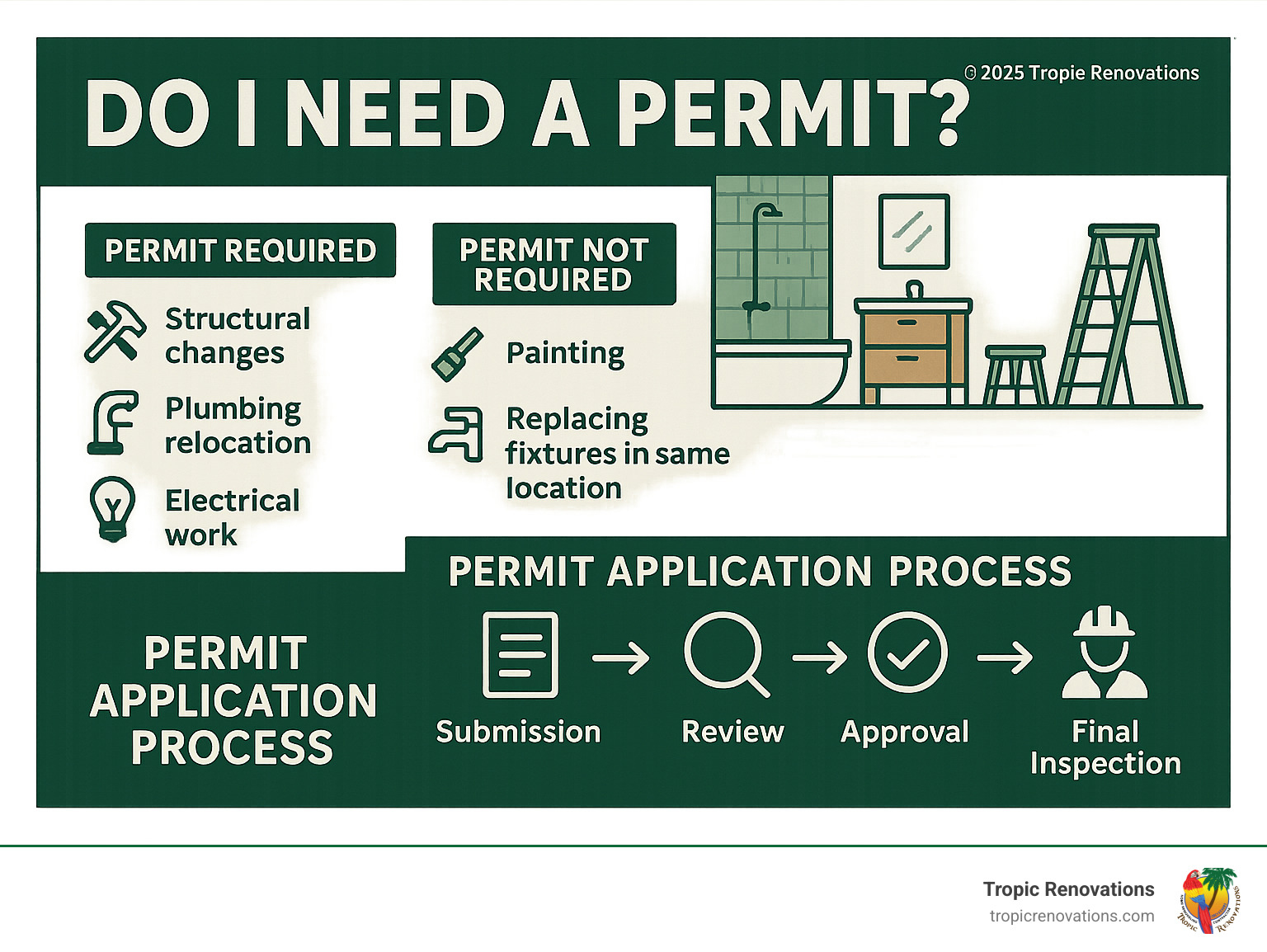
Basic Do I need a permit? glossary:
Why Building Permits Are a Must for Major Renovations
When you’re planning a bathroom renovation, you might wonder “Do I need a permit?” for what seems like a straightforward project. The truth is, building permits aren’t just red tape – they’re your first line of defense against costly mistakes and dangerous oversights.
Ensuring safety is the primary reason permits exist. The Florida Building Code sets strict standards for construction work, and permits ensure your renovation meets these requirements. When you move plumbing lines or add electrical circuits, there’s real potential for serious problems if the work isn’t done correctly. A permit process includes inspections that catch issues before they become hazards.
I’ve seen what happens when homeowners skip permits on major renovations. Water damage from improperly installed plumbing can cost tens of thousands to repair. Electrical work that doesn’t meet code can create fire risks that put your family in danger. These aren’t scare tactics – they’re real consequences we help homeowners avoid every day.
Protecting your property value is another crucial reason permits matter. When you eventually sell your home, buyers and their lenders want proof that renovations were done legally and safely. Unpermitted work can derail a sale or force you to reduce your asking price significantly.
Your homeowner’s insurance coverage depends on code-compliant work too. Insurance companies can deny claims related to unpermitted renovations, leaving you financially responsible for damages. This is especially important in Florida, where weather-related claims are common.
The legal requirements are straightforward – major renovations require permits, period. Trying to avoid this requirement can lead to stop-work orders that halt your project indefinitely. You might also face hefty fines and be required to tear out completed work to bring it up to code.
Avoiding future sale complications is worth considering now, even if selling isn’t on your immediate horizon. Unpermitted work creates a paper trail problem that can surface years later, potentially costing you thousands when you least expect it.
At Tropic Renovations, we handle the permit process for our clients because we understand how important it is. We work directly with local authorities and know exactly what’s required for each type of project. For detailed information about the permit process in our area, you can check out building permits in Sarasota County directly.
The bottom line? Permits protect your investment, your family’s safety, and your peace of mind. They’re not an obstacle – they’re an essential part of doing the job right.
Bathroom Projects That Almost Always Require a Permit
When homeowners ask us “Do I need a permit?” for their bathroom renovation, I always tell them it depends on how deep they’re planning to dig into their home’s bones. If you’re going beyond what I call the “pretty stuff” and getting into the structural or mechanical systems, you’re almost certainly going to need that permit.
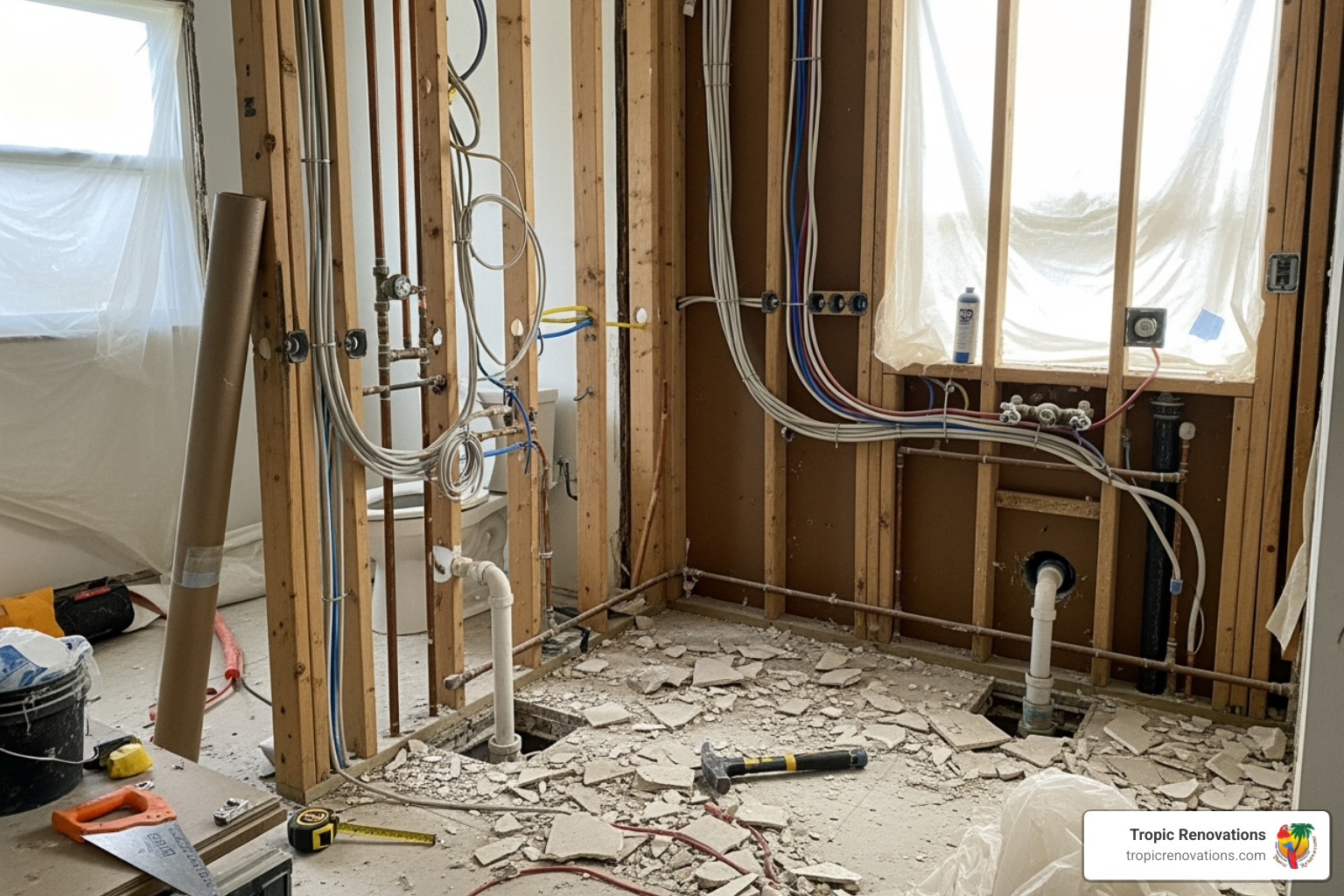
Let me walk you through the bathroom projects that almost always trigger permit requirements. Structural changes are the big kahuna here. If you’re removing or moving walls – even non-load-bearing ones – you’re changing your home’s layout in a way that affects building systems. That wall might house electrical wiring, plumbing lines, or ventilation ducts that need to be rerouted safely.
Expanding the bathroom’s footprint is another sure bet for needing a permit. Maybe you want to bump out a wall to create more space, or you’re converting that adjacent linen closet into part of your new master bath. These changes affect your home’s heated square footage and often require structural modifications that building officials need to review.
Here’s where things get really important: altering plumbing systems. If you’re relocating a toilet or sink, adding a new shower, or moving any plumbing fixture from its current location, you’re getting into serious permit territory. Even moving a sink just three feet over requires new water supply lines, drain connections, and possibly vent modifications. I’ve seen homeowners think they can skip permits for “small” plumbing moves, but trust me – there’s no such thing as a small plumbing change in the eyes of building code.
Electrical system changes are equally critical. Adding new outlets or circuits, installing that fancy new vanity lighting system, or upgrading your electrical panel to handle increased demand – all of these require permits. Electrical work done incorrectly isn’t just a code violation; it’s a genuine fire hazard that could put your family at risk.
Don’t forget about changing ventilation systems either. If you’re installing a new exhaust fan that requires fresh ductwork, or modifying your HVAC system to better serve your expanded bathroom, permits ensure these changes won’t create moisture problems or compromise your home’s air quality.
The pattern here is simple: if your renovation affects your home’s structure, plumbing, electrical, or HVAC systems, you need a permit. These aren’t arbitrary rules – they’re safety measures that protect your investment and your family. The permit process might seem like a hassle, but it’s nothing compared to the headaches you’ll face if you skip it and get caught later.
Kitchen renovations follow similar rules, which is why we often refer clients to our guide on Do I Need a Permit to Remodel My Kitchen? – the principles are remarkably similar when you’re dealing with major home systems.
When Can You Skip the Permit? Cosmetic Updates vs. Renovations
Here’s some welcome news for homeowners planning a bathroom refresh: not every project requires the permit process. The magic question “Do I need a permit?” has a much simpler answer when you’re focusing on cosmetic updates rather than full-scale renovations.
The key difference lies in whether you’re changing how your bathroom functions versus how it looks. If you’re not touching the bones of your home—the plumbing lines, electrical circuits, or structural elements—you’re likely in the clear.
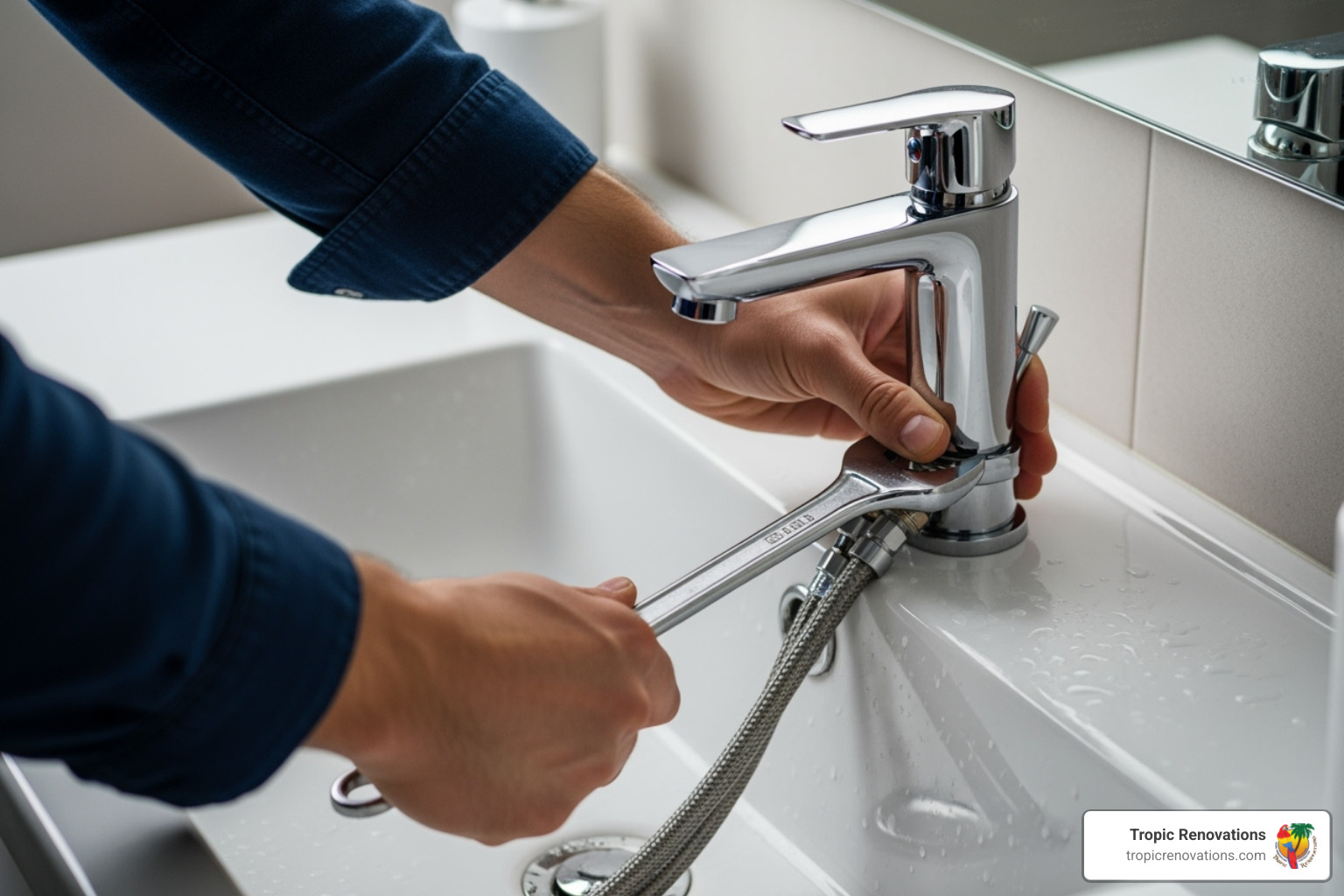
Think of it this way: if you can complete the project without moving any fixtures from their current locations, you’re probably dealing with a cosmetic update. Painting and wallpapering are perfect examples—they can completely transform your space without requiring any permits. The same goes for replacing floor tiles on your existing subfloor, as long as you’re not altering drainage or the floor’s structure.
Installing a new vanity is another area where homeowners often wonder about permits. The good news? If you’re simply swapping out the cabinet and using the exact same plumbing connections, no permit is needed. Similarly, replacing countertops falls into the cosmetic category when you’re not moving the sink or changing faucet locations.
Even swapping a toilet in the same location typically doesn’t require a permit, provided you’re connecting to the existing flange and water supply without any relocation. The same principle applies to changing light fixtures—as long as you’re using the same electrical box and not running new wiring, you’re good to go.
Other permit-free updates include replacing bathroom accessories like towel bars and mirrors, along with minor drywall repairs that don’t involve structural elements.
While these projects might seem straightforward, even cosmetic changes should respect local zoning regulations. When you’re ready to tackle larger renovations, proper budgeting becomes crucial. Our guide on How to Budget for Your Home Remodel With a Contractor can help you plan for projects that do require permits.
The bottom line? When in doubt, a quick call to your local building department can save you headaches later. It’s always better to ask upfront than deal with complications down the road.
The Big Question: Do I Need a Permit for My Specific Project?
Even with all the general guidelines we’ve covered, you might still be scratching your head about your particular bathroom renovation. Trust me, this is completely normal! Every project has its unique twists, and the question “Do I need a permit?” deserves a clear, personalized answer.
Let’s break down exactly who’s responsible for getting permits, what happens if you skip them, and how to get definitive answers for your specific situation in Sarasota or Charlotte County.
Who is Responsible for Getting the Permit?
Here’s something that catches many homeowners off guard: even if you hire a contractor to handle your renovation, you’re ultimately responsible for making sure the proper permits are obtained. The permit is tied to your property, not your contractor.
Think of it like this – if something goes wrong years down the road, the city won’t be looking for your contractor. They’ll be knocking on your door as the property owner. That’s why we always make sure our clients understand this responsibility upfront, even though we handle all the permit applications and paperwork for them.
This brings up a crucial point about licensed contractors. In Florida, only a licensed contractor or the homeowner can legally pull permits for remodeling work. If someone offers to do your bathroom renovation without permits, or seems hesitant about the permit process, that’s a massive red flag.
We’ve seen too many homeowners get burned by unlicensed contractors who promise to “handle everything” without proper permits. These folks often disappear when problems arise, leaving you holding the bag. A reputable, licensed contractor will always insist on proper permits because we understand the codes, the inspection process, and what’s at stake for you.
You can always verify a contractor’s license on sunbiz.org, and legitimate contractors will display their license numbers on their trucks, websites, and business materials. When in doubt, check it out! Our guide on How to Find a Reliable Home Remodel Contractor can help you avoid these costly mistakes.
What Are the Consequences of Not Getting a Permit?
I’ll be straight with you – skipping required permits might seem like a shortcut, but it’s actually a fast track to major headaches and financial pain. In my years of experience, I’ve seen the aftermath of unpermitted work, and it’s never pretty.
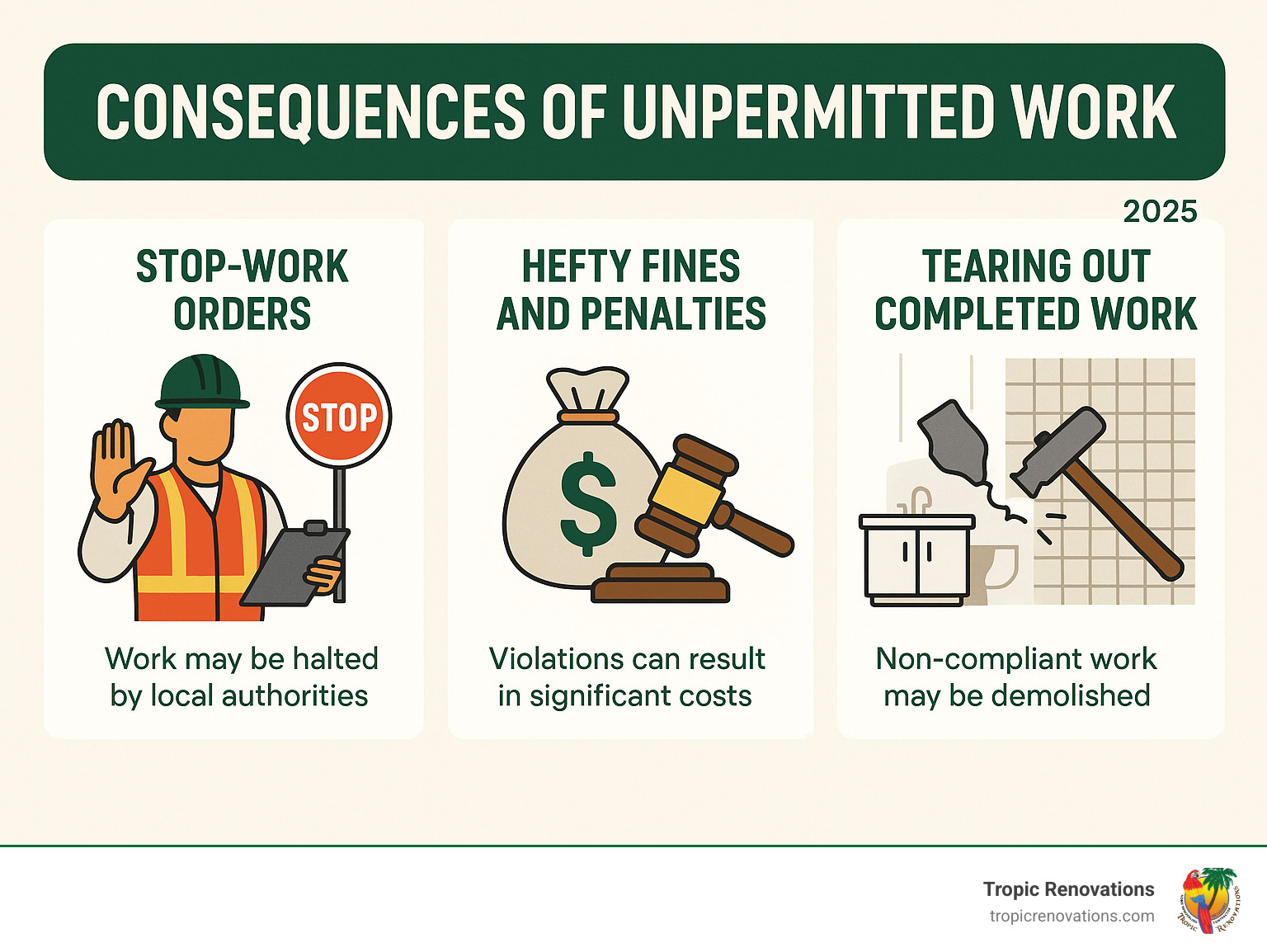
The most immediate consequence is a stop-work order. When the building department finds unpermitted work, they can shut down your project instantly. Nothing moves until you get proper permits, which means delays and extra costs you didn’t budget for.
Then come the financial penalties. We’re talking serious money here – fines can reach up to $50,000 for first offenses in some jurisdictions. If you try to get permits after the work is already done, you’ll face administrative fees ranging from 25% to 100% of the full permit cost. That’s like paying double for the privilege of doing things backwards.
Here’s the part that really hurts: sometimes you’ll be required to tear out completed work. Imagine spending thousands on a beautiful new bathroom, only to be forced to demolish it because it doesn’t meet code. I’ve seen homeowners in tears over this exact scenario.
Selling your home becomes a nightmare with unpermitted work. Future buyers and their lenders want proof that major renovations were done legally. Without permits, your beautiful renovation might actually hurt your home’s value instead of helping it. The work can’t even be counted as an improvement on paper.
Your homeowner’s insurance could deny claims related to unpermitted work. If faulty plumbing from an unpermitted renovation causes water damage, or improper electrical work leads to a fire, you might be on your own financially.
Finally, there’s legal liability. If someone gets hurt because of unpermitted work, you could be held responsible. Permits aren’t just bureaucratic paperwork – they’re your protection against these serious risks.
How to Confirm if You Need a Permit in Sarasota or Charlotte County
The good news is that getting a definitive answer about your specific project is easier than you might think. Your local building department is your best friend here, and they actually want to help you get it right.

Contact your building department directly – this is always our top recommendation. The staff at these offices deal with permit questions all day, and they can give you specific guidance based on your exact project.
For Sarasota County residents, the Sarasota County Permitting Office has helpful online resources and knowledgeable staff ready to answer your questions. Their website often has FAQs and permit checklists that can clarify requirements quickly.
If you’re in Charlotte County, the Community Development Department is your go-to resource. They’ve made their permitting information easily accessible online, and you can find detailed guidance at Permitting in Charlotte County, FL.
Many local governments now offer online portals where you can check permit requirements, submit applications electronically, and even schedule inspections. These digital tools are often the fastest way to get answers and keep your project moving.
When you contact the building department, be ready with detailed information about your project. The more specific you can be about what you’re planning – like “relocating toilet and adding new shower” or “removing wall between bathroom and closet” – the better guidance they can provide.
One important tip: don’t rely on what your neighbor or friend tells you about their project. Permit requirements can change, and what applied to their renovation might not apply to yours. Always verify information directly with the official source.
Taking these steps upfront saves you from costly surprises later. A quick phone call or website visit now can prevent months of headaches and thousands in unexpected expenses down the road.
Conclusion: Renovate with Confidence and Peace of Mind
Planning a bathroom renovation doesn’t have to feel overwhelming, especially when it comes to permits. Throughout this guide, we’ve tackled the big question “Do I need a permit?” from every angle, and here’s what it all comes down to: permits aren’t roadblocks – they’re your safety net.
Think of building permits as the foundation of a smart renovation. They ensure your beautiful new bathroom isn’t just Instagram-worthy, but also structurally sound, electrically safe, and properly plumbed. Permits protect your investment in ways that go far beyond the initial construction phase. They safeguard your property value, prevent insurance headaches, and give you confidence that your renovation meets Florida Building Code standards.
Ensuring your renovation is safe and legal isn’t just about following rules – it’s about protecting your family and your biggest financial asset. When you skip permits for major work like moving plumbing or electrical systems, you’re essentially gambling with your home’s safety and your financial future.
This is where the value of a professional really shines through. At Tropic Renovations, we’ve seen too many homeowners get burned by contractors who cut corners on permits or aren’t properly licensed. As a state-licensed home remodeling contractor serving Sarasota & Charlotte County and surrounding areas like Casey Key, Englewood, Manasota Key, Nokomis, North Port, Osprey, Palmer Ranch, Siesta Key, and Venice, we handle the permit process from start to finish.
Our team brings 350+ years of combined technician experience to every project, and we never subcontract our core trades. This means when we pull permits for your bathroom renovation, we’re backing that work with our own skilled craftsmen. We understand the local building codes inside and out, and we make sure every aspect of your renovation is code-compliant from day one.
What sets us apart is our commitment to transparency. We don’t just handle the permits behind the scenes – we educate you about the process so you understand exactly what’s happening and why. Our comprehensive, dust-free renovations are designed to be completed in 6 months or less, without cutting corners on quality or compliance.
The bottom line? Don’t let permit concerns stop you from creating the bathroom of your dreams. Instead, let proper permitting be the foundation that gives you complete peace of mind. When you work with licensed, insured professionals who understand the local requirements, the permit process becomes just another step toward your beautiful, safe, and valuable home improvement.

Ready to move forward with confidence? We’re here to guide you through every step, from initial design concepts to final inspections, ensuring your bathroom renovation is everything you dreamed of – and completely by the book. Start planning your dream bathroom renovation with us today!