
How to minimize dust? Flawless Home 2025
Why Dust is More Than Just a Nuisance
How to minimize dust? Here are the most effective strategies:
- Prevent Entry: Use doormats, implement a no-shoes policy, seal cracks around windows and doors.
- Clean Smart: Vacuum weekly with a HEPA filter, dust from top to bottom using microfiber cloths.
- Optimize Systems: Change HVAC filters every 1-3 months, use air purifiers, maintain humidity at 30-50%.
- Manage Sources: Groom pets regularly, wash bedding weekly, declutter surfaces.
- Choose Wisely: Opt for hard flooring over carpet, use washable rugs, select easy-to-clean furniture.
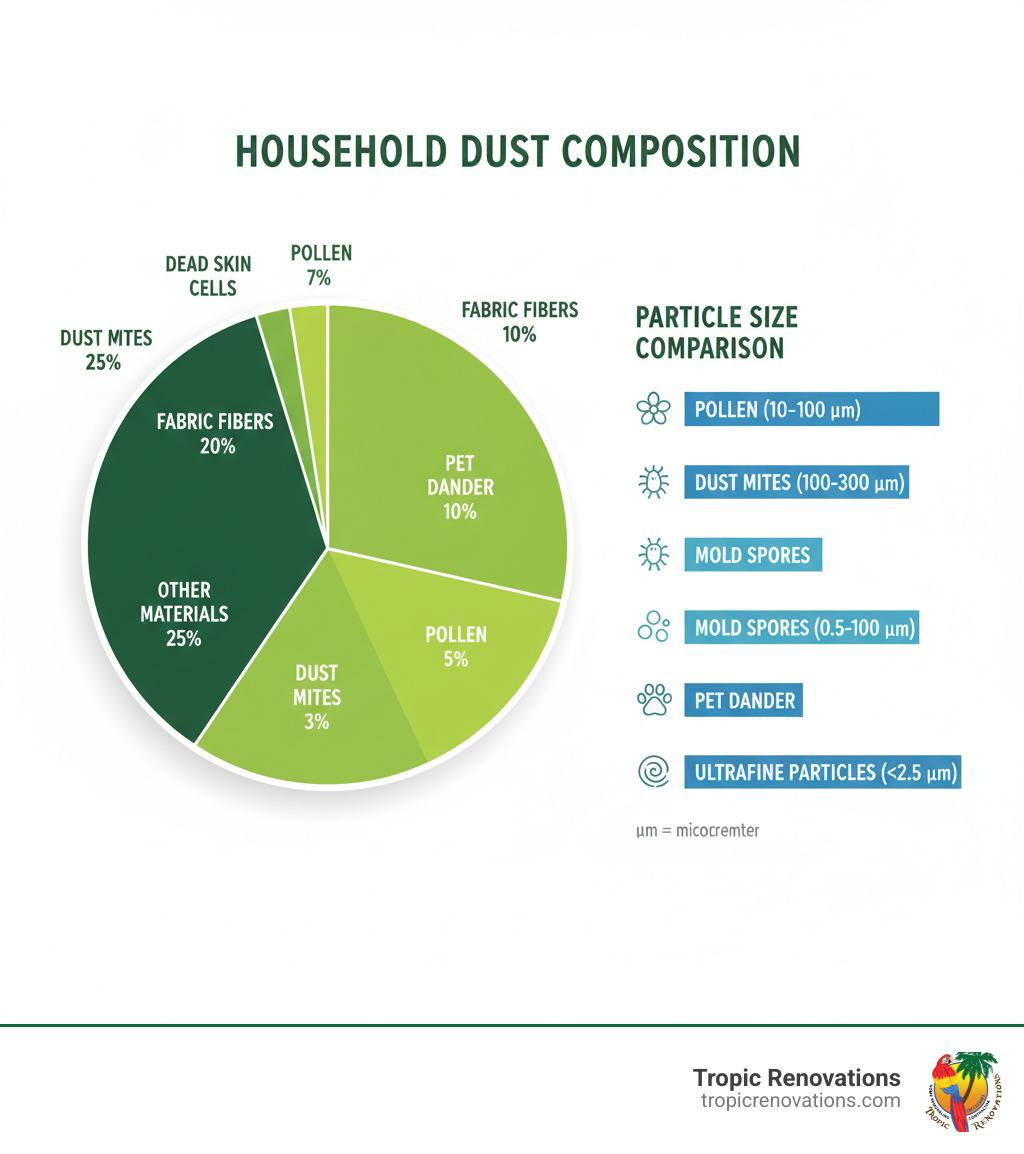
Dust is more than an eyesore; it’s a health concern for homeowners in Southwest Florida and beyond. A typical U.S. home can accumulate 40 pounds of dust each year, a mix of dead skin cells, pet dander, pollen, soil, dust mites, and microplastics. The smallest particles can enter your bloodstream, posing risks for those with allergies, asthma, or other respiratory conditions.
Fortunately, you can control dust by understanding its sources and using the right strategies. This guide offers proven methods to minimize dust in your home.
I’m Jeff Lexvold, and after working on over 1,000 home renovations with Tropic Renovations, I’ve learned how to minimize dust during remodeling and everyday life. We developed dust-free techniques because we know a clean home is essential for your family’s health and comfort.
Basic How to minimize dust? terms:
Understanding the Enemy: What is Dust and Why is it a Problem?
Before you can win the battle against dust, you need to know what you’re fighting. Household dust is a complex mixture of particles you don’t want in your home.
According to Chemical & Engineering News, dust contains dead skin cells, hair, clothing fibers, bacteria, dust mites, bits of dead bugs, soil particles, pollen, and microscopic plastic. It’s a tiny museum of everything that passes through your home.
Surprisingly, about 60% of dust comes from outside, hitching a ride on shoes, clothes, and hair every time you open a door. Your home is also a dust factory, producing particles from pet dander, human skin cells, carpet fibers, and cooking byproducts. Leaky air ducts and cracks around windows add to the problem.
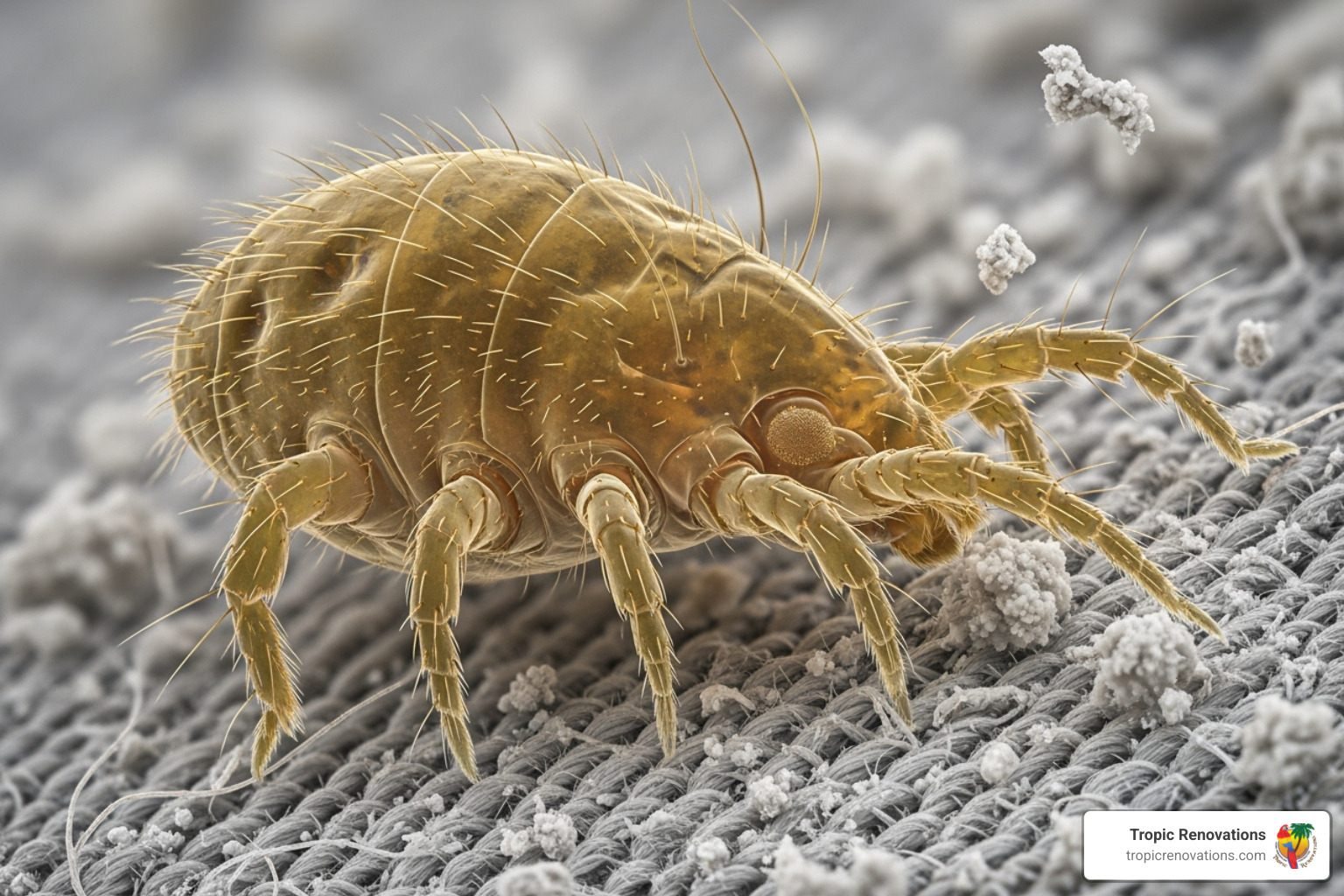
This matters because dust is a genuine health concern. Dust mites, which feed on dead skin cells, are a primary trigger for indoor allergies and asthma attacks. The real danger, however, lies in fine particulate matter (PM2.5). These ultra-fine particles can bypass your body’s defenses, traveling from your lungs into your bloodstream, where they can cause respiratory irritation and even cardiac issues. For those with high sensitivities, inhaling organic dust can lead to serious conditions like Hypersensitivity pneumonitis.
Understanding your dust is the first step in learning how to minimize dust effectively.
Fortify Your Defenses: How to Prevent Dust from Entering Your Home
Prevention is your most powerful weapon when learning how to minimize dust?. It’s easier to stop dust at the door than to chase it around your living room.
Start by sealing entry points. Dust squeezes through tiny gaps around windows and doors. Use weather stripping for doors and caulking for window gaps to cut down on infiltration. As a bonus, this also helps prevent moisture intrusion, which can lead to mold. We’ve written about this in How Cracks Lead to Mold.
Next, focus on your entryway. High-quality doormats outside and inside each entrance trap dirt and pollen before they travel further. The real game-changer, however, is a no-shoes policy. This single habit dramatically reduces the outdoor contaminants tracked inside, as shoes are magnets for soil, pollen, and other debris.
Timing also matters. During allergy season (typically March-May), keep windows and doors closed to block pollen. Resist opening windows on windy days or when pollen counts are high.
Finally, don’t forget your window screens. They filter dust and pollen but only work when clean. We recommend washing your screens at least once a year, ideally in early spring, with soapy water to restore their filtering power. Each of these prevention strategies builds a fortress around your home, keeping dust where it belongs—outside.
The Ultimate Cleaning Arsenal: Best Methods and Tools for Dust Removal
Even with strong defenses, some dust will get in. With the right tools and techniques, you can remove it effectively instead of just pushing it around.
Mastering Your Dusting Technique
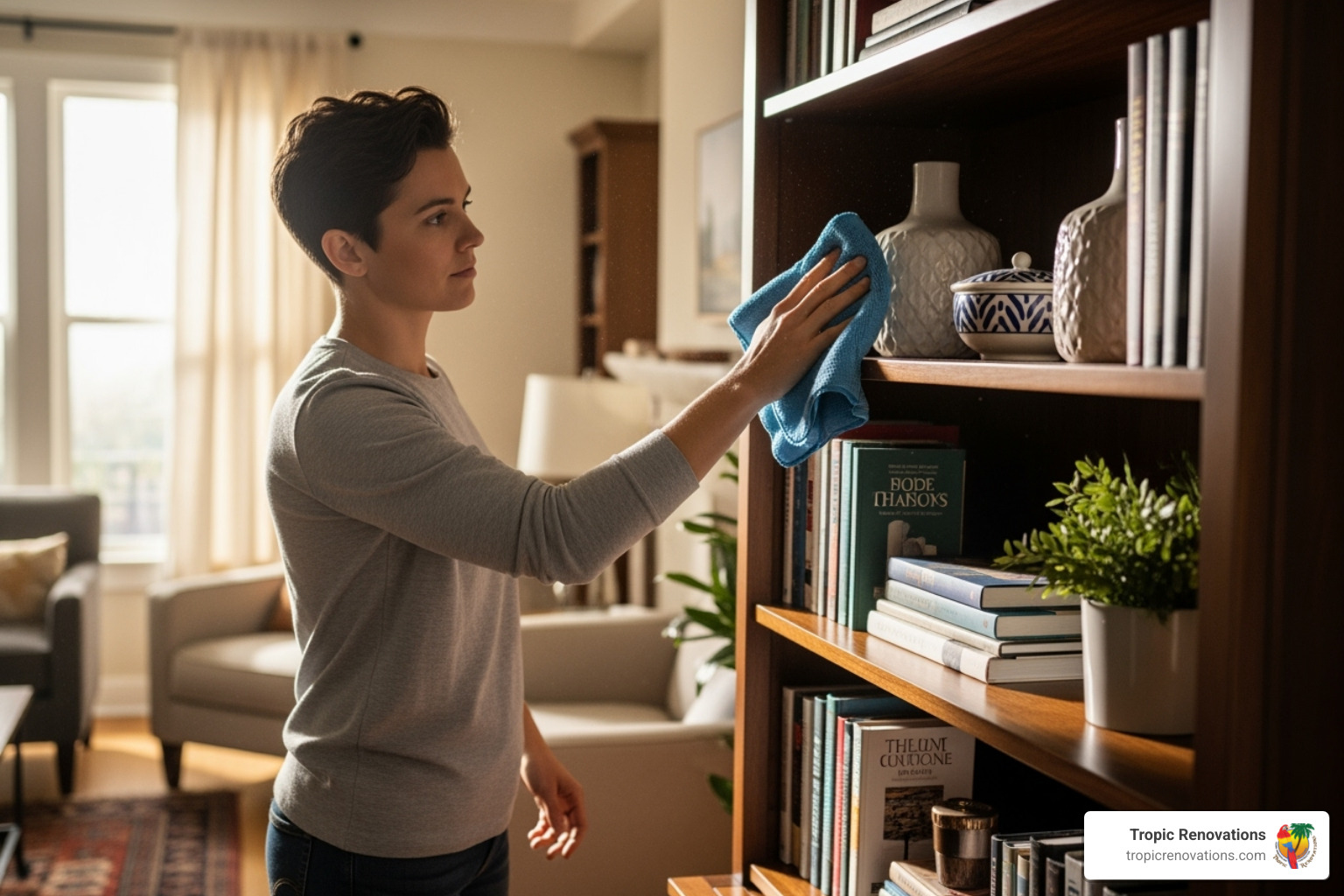
The foundation of effective dusting is simple: work from top to bottom and trap the dust, don’t just relocate it. Start with ceiling fans and high shelves, so falling particles land on surfaces you haven’t cleaned yet. Ditch the feather duster, which just flings dust into the air. Instead, use a slightly damp microfiber cloth. Its fibers attract and trap dust particles, removing them for good.
The Power of the Right Vacuum
Your vacuum is heavy artillery, but not all are created equal. The most important feature is a HEPA filter, which captures 99.97% of particles like pollen, dander, and dust mites. For more details, see the EPA’s guide on What is a HEPA filter?. Look for a vacuum with a sealed filtration system to prevent dusty air from leaking out. Proper vacuuming technique involves slow, overlapping passes to pull up embedded debris. Also, remember to clean your vacuum filters every few months to maintain suction and prevent dust from being blown back into the air.
Tackling Tricky Dust Traps
Dust loves to hide. Here’s how to tackle common problem areas:
- Upholstery: Your couch and chairs are dust magnets. Use your vacuum’s upholstery attachment regularly.
- Bedding: Wash sheets and pillowcases weekly in hot water (at least 120°F) to kill dust mites. Vacuum your mattress every few months.
- Bookshelves: Declutter what you can and dust thoroughly with a microfiber cloth. Glass-doored bookcases are a great dust-reducing option.
- Electronics: Static electricity attracts dust to TVs and computers. Use a soft paintbrush or a barely damp microfiber cloth on screens and vents.
- Blinds: An old sock slipped over your hand is a quick and effective tool for wiping down individual slats.
- Ceiling Fans: Use an extendable microfiber duster to trap dust on blades before it gets flung around the room.
Other common hiding spots include the tops of doors and cabinets, baseboards, curtains, lampshades, and behind appliances. A quick, consistent weekly cleaning of these areas is far more effective than letting dust build up.
Beyond Cleaning: How to Minimize Dust with Smart Home Systems
Your home’s built-in systems can fight dust around the clock. When properly maintained, they are powerful allies in your quest for cleaner air.
Your HVAC system is your home’s lungs. Neglecting it turns it into a dust distributor. The simplest upgrade is switching to high-MERV filters (MERV 10 or higher; MERV 13 is recommended by the EPA). These filters get dirty faster, so they require regular changes—every 1-3 months. A dirty filter restricts airflow and loses effectiveness.
Leaky ductwork is another hidden culprit, pulling dust from attics and crawl spaces. Having your ducts inspected and sealed can eliminate this source of recirculating dust. For more on filtration, see this guide on what is a HEPA filter.
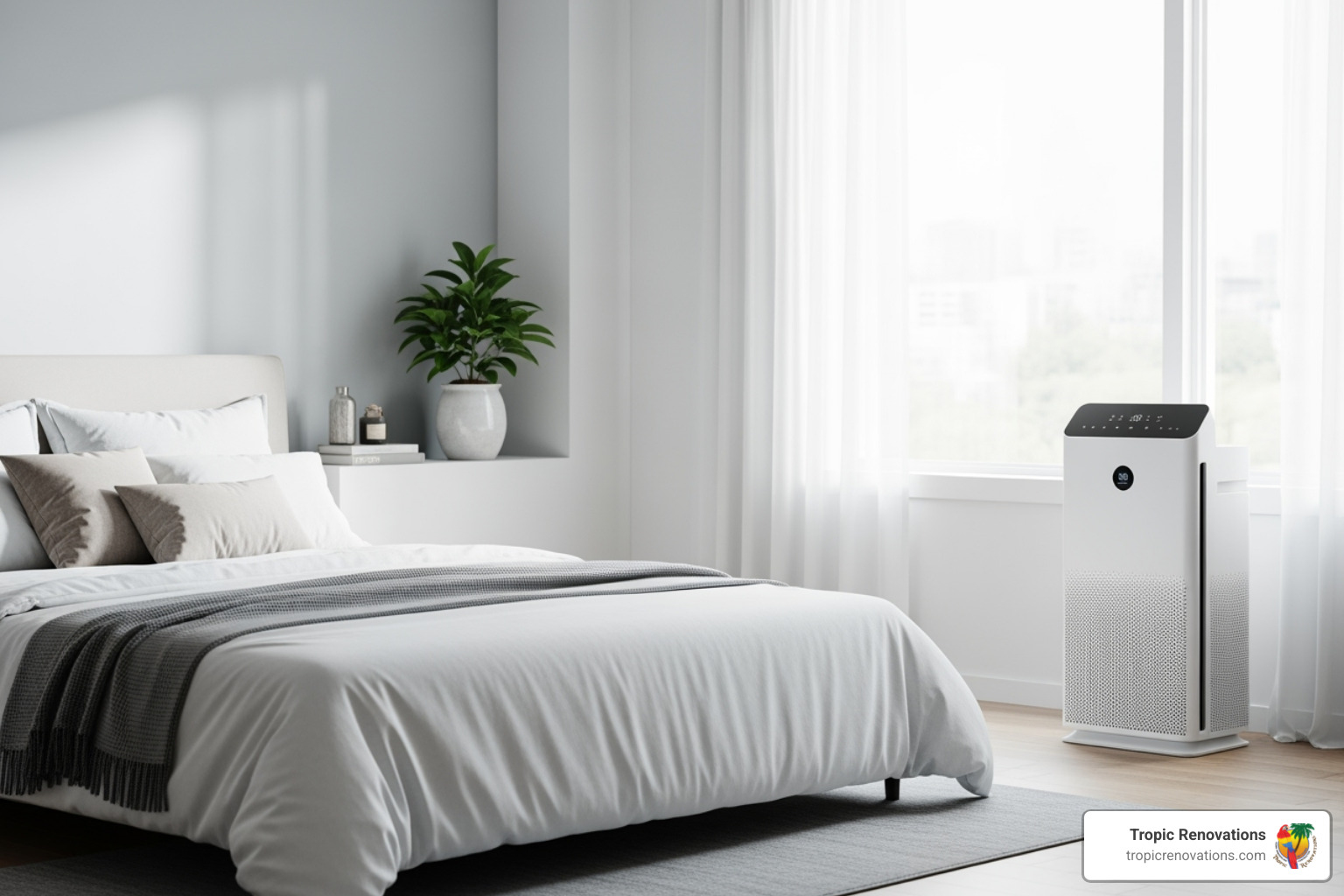
For targeted control, air purifiers with True HEPA filters are game-changers in bedrooms and living areas. They capture 99.97% of airborne particles, including dust, pollen, and pet dander.
Finally, control your humidity. Dust mites thrive in humidity above 60%. Keeping indoor humidity between 30% and 50%, as recommended by the EPA, creates an environment where they can’t survive. Use a hygrometer to monitor levels and a dehumidifier if your home is consistently too humid, a common issue in the Sarasota area.
Optimizing Your Routine and Home for a Dust-Free Life
The secret to winning the war on dust is building consistent habits and making strategic choices about your home’s design.
Creating a Dust-Resistant Cleaning Schedule
Consistency beats intensity. A little attention each week is more effective than sporadic deep cleans. Here’s a simple schedule:
- Weekly: Vacuum high-traffic areas, dust all surfaces from top to bottom with a microfiber cloth, and wash all bedding in hot water (120°F+) to kill dust mites.
- Monthly: Clean your vacuum filter and shake out area rugs outdoors.
- Seasonally/Annually: Wash window screens in the spring. Consider professional deep cleaning for any remaining carpets once or twice a year. Have HVAC ducts inspected every few years.
How to minimize dust? Manage Pets and Clutter
Our furry friends are major dust contributors. Regular grooming, especially brushing outdoors, catches fur and dander at the source. Wash pet bedding weekly, shaking it out outside first.
Clutter creates more surfaces for dust to settle. Decluttering your surfaces makes dusting faster and more effective. When choosing decor, opt for smooth, wipeable items over intricate ones. Use sealed storage containers for items not in regular use to protect them and keep surfaces clear.
How to minimize dust? Consider Your Home’s Finishes
Some design choices make dust control far easier. The single biggest factor is hard flooring versus carpet. Carpet is a giant dust sponge, trapping allergens deep in its fibers. Hardwood, tile, or laminate flooring is much easier to keep clean, as dust has nowhere to hide.
If you want softness, use low-pile, washable area rugs. For furniture, leather or smooth wood and metal pieces are easier to wipe down than heavily textured fabrics.
When planning a renovation, dust control should be part of the conversation. At Tropic Renovations, our Dust-Free Remodeling process is designed to contain construction dust at the source. We use depressurization, plastic zip doors, and dust-collecting tools to transform your home without turning it into a construction zone. Learning how to minimize dust shouldn’t mean living in a cloud of it during your renovation.
Frequently Asked Questions about Minimizing Dust
What causes so much dust in my house?
Dust comes from both inside and outside your home. Indoor sources include dead skin cells (we shed thousands per minute), human and pet hair, and fibers from clothing and carpets. However, about 60% of dust comes from outdoor sources like pollen, soil, and pollutants that drift in or are tracked inside. The number of people and pets in your home, along with the condition of your HVAC system (leaky ducts or dirty filters), also significantly impacts dust levels.
Can houseplants really help reduce dust?
Yes, but their impact is modest. Plants with broad or textured leaves (like spider plants or rubber plants) can trap some airborne dust particles on their surfaces. They also help improve overall air quality. However, they are a helpful supplement, not a primary solution. You’ll still need to rely on proper cleaning and filtration, and you’ll also need to wipe the dust off the plant leaves themselves.
How can I keep dust off furniture for longer?
While you can’t eliminate dust entirely, you can extend the time between cleanings. Here’s how:
- Dust correctly: Use a damp microfiber cloth to trap dust instead of a feather duster that just spreads it around.
- Clean the air: An air purifier with a True HEPA filter is the most effective way to remove airborne dust before it can settle on surfaces.
- Control humidity: Keeping humidity between 30-50% discourages dust mites, a major component of dust.
- Clean top-to-bottom: Always dust higher surfaces before lower ones to avoid re-dusting your furniture.
Conclusion
Now you have a roadmap for how to minimize dust in your home. The most effective approach combines three key elements: prevention, smart cleaning, and system maintenance. Seal entry points, use HEPA filters and microfiber cloths, and keep your HVAC system and humidity levels in check.
Consistency is key. A simple weekly routine will do more for your home and your health than infrequent deep cleans. Your lungs will thank you for the effort.
At Tropic Renovations, we’ve seen on over 1,000 projects how invasive construction dust can be. That’s why we developed our dust-free remodeling process. We use advanced containment techniques because we believe your home should remain a healthy, livable space during a renovation.
Ready to upgrade your home without the mess? Learn how we can help with your kitchen remodel. We’ll transform your space while keeping your air clean—because that’s how remodeling should be done.