
How to start renovation? 5 Essential Steps for Success
Why Starting Your Renovation the Right Way Matters
How to start renovation begins with a clear plan, a realistic budget, and the right team. Starting a home renovation can feel overwhelming, whether it’s a long-held dream or a response to an urgent need. Either way, the key to success is proper planning before the first hammer swings.
Without a solid plan, projects often spiral into budget overruns, timeline delays, and stressful miscommunication. Many homeowners struggle with coordinating contractors and managing unexpected costs. The good news is that most of these problems are preventable with the right approach from day one.
This guide walks you through the essential phases of starting your renovation—from defining your vision and setting a budget to assembling your team and preparing for construction. You’ll learn how to prioritize and avoid common pitfalls.
I’m Jeff Lexvold, founder of Tropic Renovations. With nearly two decades of experience renovating over 1,000 homes, I’ve learned that proper planning is the single most important factor in achieving your dream home without the nightmare. Let’s get it right from the beginning.
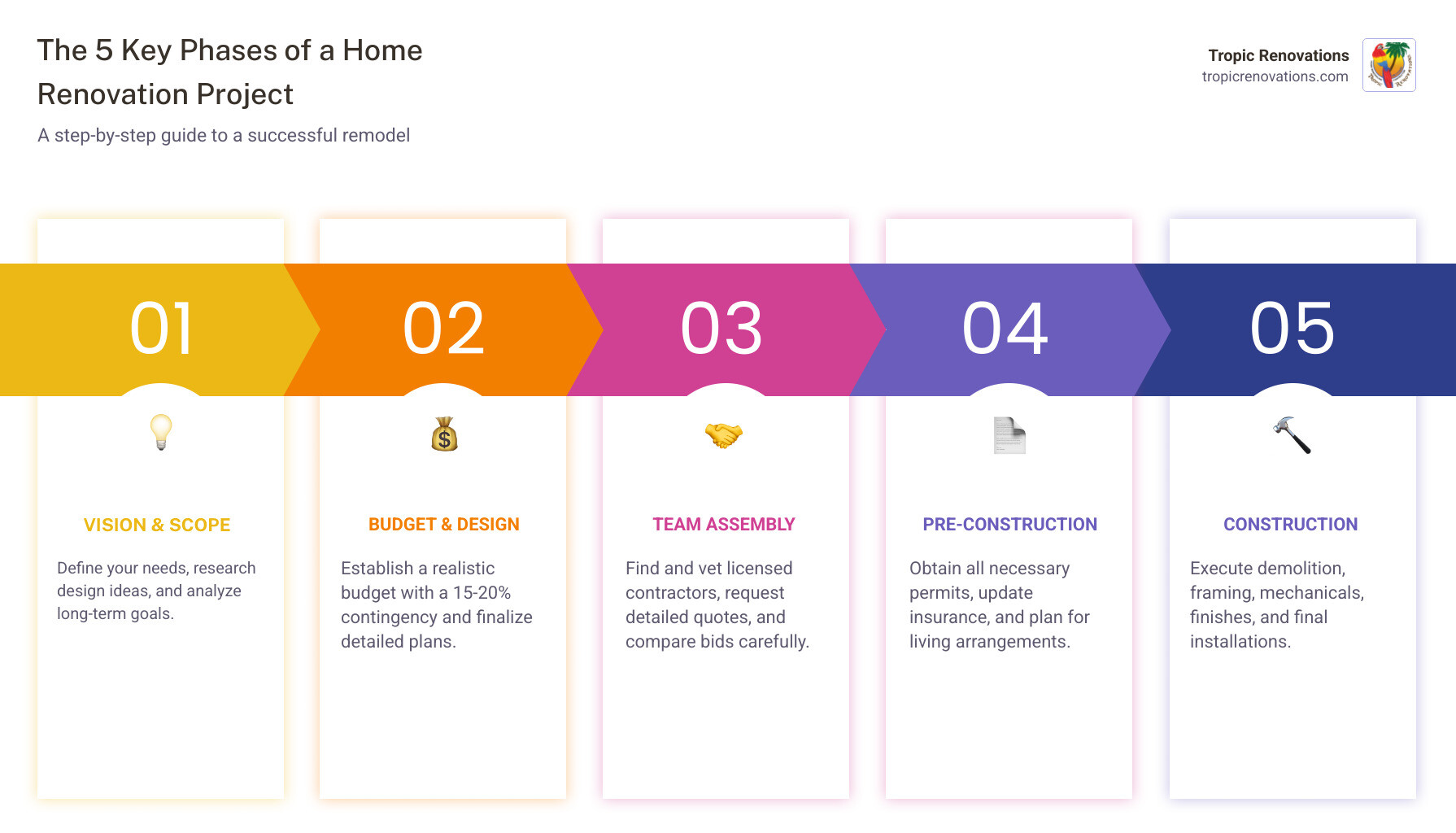
Phase 1: How to Start a Renovation by Defining Your Vision and Scope

Before picking out tiles or paint, you must clarify what you want to accomplish. Understanding how to start renovation planning means thinking through your current situation, daily frustrations, and future needs. The best renovations solve real problems and improve how you live.
While kitchens and bathrooms are popular renovations that boost home value, it’s important to consider your local market. Over-improving for your area is money you won’t get back. The goal is to update your home in a way that serves your family and adds value without going overboard. Renovating an older Southwest Florida home is a great opportunity to update infrastructure while keeping its original charm.
How to start renovation planning: Analyzing your needs and goals
Getting clear on your needs and goals is the most critical step. Get everyone in the household involved to uncover daily frustrations you may have gotten used to. Consider both your current family needs and your future needs. Will you need a home office, accessible features for aging in place, or more space as your family grows? Answering these questions ensures your renovation serves you for years to come.
Make a comprehensive list of your daily frustrations, like a cramped bathroom or an inefficient kitchen layout. Then, get honest about must-haves versus nice-to-haves to align your vision with your budget. A “must-have” might be fixing a leak, while a “nice-to-have” could be high-end finishes.
To help organize your thoughts, use these planning worksheets: What do you want to change? (Worksheet A) and Prioritizing – needs and wants (Worksheet B). They help you clarify what matters most.
Researching and Creating Your Design Vision
Now for the fun part: creating your design vision. Gather inspiration from magazines, online platforms like Pinterest, and local showrooms. Collect images of what you love, but be sure to refine them to define your style. Look for common themes in colors and materials to find your design voice.
As you gather ideas, begin material selection and product research, keeping Florida’s climate in mind. Materials must withstand our humidity and heat. A professional can guide you on what performs well locally.
Renovation is also a prime opportunity to improve energy efficiency and sustainability. Upgrading insulation, windows, or HVAC systems can significantly lower energy bills. Also, consider healthier, non-toxic materials like low-VOC paints to improve indoor air quality. For more information, the EPA offers excellent resources: More about sustainable design from the EPA.
Finally, create a mood board to visualize how your chosen colors, materials, and styles work together. This helps you spot potential issues before making commitments. Nailing down your vision now saves time, money, and stress later.
Phase 2: Budgeting, Financing, and Finalizing the Design

Now it’s time to turn your vision into a detailed plan and budget. This phase is about creating a solid financial foundation and developing plans that everyone can follow.
How to start renovation budgeting: Key financial considerations
Establishing a realistic budget is essential. Every project will have unexpected costs, so the first rule is to set aside a contingency fund of 15-20% of your total budget. This safety net covers surprises like hidden rot or outdated wiring, allowing you to handle issues without derailing the project.
Your budget should include building materials, finishes, labor, fixtures, and permits. Researching costs and getting professional estimates early on prevents sticker shock. While not every dollar spent is returned upon sale, smart renovations focused on functional upgrades in kitchens and bathrooms typically yield excellent returns in the Sarasota and Charlotte County markets.
For financing, home equity loans and renovation-specific loans are common options. It’s wise to [meet with a financial advisor](https://www.desjardins.com/ca/personal/goals-life-events/consult-expert-personal-assets/index.jsp) to determine the best route for your situation.
For a deeper look at budgeting, see our guide: [How to Budget for Your Home Remodel with a Contractor](https://tropicrenovations.com/how-to-budget-for-your-home-remodel-with-a-contractor/).
The Role of Floor Plans and Architectural Design
With a budget in place, it’s time to finalize the design. Your inspiration boards are now transformed into buildable architectural drawings and detailed floor plans. Professional designs are required for municipal permits and approvals if your project involves structural changes like moving walls.
Working with a professional design-build team like Tropic Renovations is a significant advantage. Our integrated designers and construction crews ensure your design is beautiful, buildable, and within budget. A good designer considers space planning, traffic flow, and how you live, ensuring the final layout is functional. For structural changes, detailed working drawings or blueprints are essential, specifying every dimension, material, and fixture.
The design-build approach eliminates communication gaps between separate architects and builders, solving problems collaboratively before they become costly. This ensures you get a realistic plan that is both beautiful and achievable. The quality of this initial design work largely determines your satisfaction with the finished project.
Learn more about this integrated approach: [What is a Design Build Contractor?](https://tropicrenovations.com/what-is-a-design-build-contractor/).
By the end of this phase, you’ll have a clear budget, financing arranged, and detailed plans—the foundation for a successful project.
Phase 3: Assembling Your Team and Getting Quotes

With your design finalized and budget set, it’s time to choose who will do the work. Finding the right team now will save you countless headaches later.
Why Work with a Professional Team
Partnering with a state-licensed, professional team provides project management expertise to keep your renovation running smoothly. They handle scheduling, material orders, and prevent costly delays.
Key advantages include:
- Quality Assurance: Licensed pros offer warranties and insurance, standing behind their work.
- Safety and Code Compliance: Professionals ensure the work meets local building codes, protecting your family and investment.
- Time and Cost Efficiency: While it may seem more expensive upfront, pros prevent costly mistakes, access trade discounts, and finish projects faster. Our commitment at Tropic Renovations is to complete projects in 6 months or less.
- Communication: A strong working relationship with your contractor is key. You should feel comfortable asking questions and confident they understand your vision.
Finding and Vetting Reliable Contractors
Finding the right contractor is worth the research. Look for local contractors who understand Southwest Florida’s unique climate and building codes. When vetting candidates, follow these steps:
- Check Licenses and Insurance: Always independently verify that a contractor is state-licensed and insured. This protects you from liability.
- Read Reviews and Testimonials: Look for patterns in online feedback to understand a contractor’s reputation.
- Ask for References: Speak with previous clients. Ask if the project stayed on budget, how issues were handled, and if they would hire the contractor again.
- Review Portfolios: Examine past work to assess craftsmanship and see if their style aligns with your vision.
For more guidance, see our guides: How to Choose a Home Remodeling Contractor and Can You Provide References?.
Requesting and Comparing Quotes
Once you have a shortlist, request detailed quotes. Provide a detailed scope of work to ensure you receive accurate bids. Vague requests lead to vague quotes and potential cost overruns. Our guide can help: How to Request a Contractor Home Remodel Quote.
Aim to get at least three quotes from qualified, licensed, and insured contractors. When comparing, don’t just pick the lowest price. A bid that’s too low is often a red flag. Instead, compare apples to apples by carefully reviewing the line items. Ensure you understand what’s included, from materials and permit fees to timelines and payment schedules.
Watch for red flags like vague descriptions, large upfront payment requests, or a lack of a written contract. A professional provides a transparent, detailed quote. To learn about our initial consultation, visit Are Estimates Free?. The goal is to find a partner who communicates clearly and delivers quality work.
Phase 4: Pre-Construction Logistics and Legalities
This pre-construction phase is where you handle legal requirements and prepare your home and family for the disruption ahead. Proper preparation now ensures a smoother renovation once work begins.
Legal and Administrative Must-Dos
Before construction begins, handle the essential paperwork to avoid future headaches.
- Building Permits: Most renovations require building permits to ensure work is safe and up to code. While your contractor typically handles the application, the homeowner is ultimately responsible. A reputable contractor will guide you through this.
- Home Insurance: Contact your provider to update your home insurance file. Your policy may need adjustment during construction, and your coverage should be increased to reflect your home’s new value post-renovation.
- Written Contract: A detailed written contract is non-negotiable. It should clearly define the scope of work, timeline, payment schedule, and process for changes. This document is your safety net, so review it carefully.
Preparing for Disruption: Living Arrangements and Communication
Renovation is disruptive. Even with a dust-free approach, you can expect noise and workers in your space. We strongly advise not living in your home during major renovations. Temporary relocation, while an added cost, preserves your family’s sanity. If you must stay, plan your living arrangements carefully by sectioning off a living area with access to a bathroom and kitchen.
Before work begins, handle logistics:
- Storing Belongings: Clear all furniture and valuables from the work areas. You may need to rent a storage unit.
- House Rules: Discuss rules with your contractor for things like bathroom use, break areas, and off-limit zones to ensure a respectful work environment.
- Communication Plan: Set up a solid communication plan from day one. Designate a point of contact with your contractor for regular updates and be available to make timely decisions to prevent delays.

Understanding Change Orders and Contingencies
Even the best plans can change. It’s important to understand how to manage surprises.
A Change Order is a mini-contract that documents any alteration to the original scope of work. Whether you decide to add something new or a necessary change arises, a formal change order documents the new work, cost, and timeline impact, keeping everything transparent.
Your 15-20% contingency fund is the financial safety net for these unknowns. Older Florida homes can have hidden deficiencies like rotted wood or dangerous, outdated wiring that are only finded during demolition. When these issues arise, your contractor should alert you, explain the necessary fix and cost, and get your approval before proceeding. Your contingency fund allows you to address these critical repairs without derailing the project or your finances. It’s insurance for your peace of mind.
Understanding the Construction Sequence

With planning complete, construction begins, turning your vision into reality. Professional contractors follow a logical sequence for efficiency and structural integrity. The typical order is: demolition, rebuilding and framing, mechanical systems, walls and finishes, and finally, final installations.
From Demolition to Framing
Construction starts with demolition, or the tear-out phase. This can range from removing old fixtures to gutting rooms to the studs. We manage this process carefully, protecting the rest of your home and using a dust-free process to minimize mess.
Next, rebuilding and framing creates the new structure. New walls and roof framing are built according to the architectural plans, forming the skeleton of your new space. Our in-house technicians handle this critical work to ensure high-quality craftsmanship, preparing the openings for doors, windows, and the upcoming mechanical systems.
Mechanicals, Walls, and Finishes
After framing, the mechanical rough-in begins. This includes installing new plumbing, HVAC systems (crucial for comfort and efficiency in Florida), and electrical wiring. All systems are installed by licensed professionals to meet safety codes before the walls are closed.
Once mechanicals are inspected, insulation is added for energy efficiency, followed by drywall and plaster. After that, interior painting begins, ideally with low-VOC paints for better air quality.
The final stage is adding the finishing touches that bring the space to life:
- Flooring installation
- Cabinet and countertop installation, a key step in our specialty kitchen and bath remodels.
- Appliance installation
- Final details like backsplashes, light fixtures, and trim work.
Proper planning and professional execution make the construction phase an exciting journey. Our efficient process, typically completed in six months or less, means you can enjoy your new space sooner.
Conclusion
Starting a home renovation is manageable when broken down into phases. The key to success is knowing how to start renovation planning the right way, from defining your vision and budget to assembling your team and preparing for construction.
Thorough preparation and partnering with the right team make all the difference. An experienced, professional contractor who understands Southwest Florida’s climate and building codes is essential for a smooth process that exceeds your expectations.
At Tropic Renovations, we’ve transformed over 1,000 homes in Sarasota & Charlotte County. Our state-licensed team offers 350+ years of combined experience, a dust-free process, and consistent quality by never subcontracting core trades. We complete projects efficiently—typically in six months or less—so you can enjoy your new space sooner.
Your dream home is waiting. Ready to take the first step?
Contact Us to begin planning your dream remodel today. Let’s turn your vision into reality—the right way, from the very start.