
How to get started? Conquer Procrastination 2025
The First Step is the Hardest
How to get started? The answer lies in understanding that the hardest part isn’t finding motivation – it’s figuring out where to begin. Here’s your quick roadmap:
- Start with just 5 minutes – commit to working for only five minutes to overcome initial resistance
- Break it down – identify the very first, smallest action you can take today
- Do first, think later – let your body lead by taking immediate physical action
- Challenge your stories – question the negative narratives holding you back
- Get external support – find accountability partners or professional help
Think about something you’re having a hard time getting started on, something important to you. Maybe it’s that home renovation project you’ve been dreaming about, or finally tackling that cluttered garage. You know exactly what it is – that thing sitting in the back of your mind, creating a low-level buzz of anxiety every time you think about it.
The truth is, objects at rest tend to stay at rest. This isn’t just physics – it’s human psychology. Our brains are wired to keep us safe and comfortable, which means they resist change and new challenges. When we think about starting something big, our minds immediately jump to all the potential difficulties, failures, and complications.
But here’s what most people don’t realize: the buildup to starting is almost always worse than the actual task itself. That overwhelming feeling? It’s often just your brain’s way of protecting you from perceived discomfort.
I’m Jeff LEXVOLD, and after personally working on over 1,000 home renovations, I’ve seen countless homeowners struggle with how to get started on their remodeling dreams. The key is understanding that every successful project – whether it’s a kitchen renovation or learning a new skill – begins with conquering that initial moment of inertia.
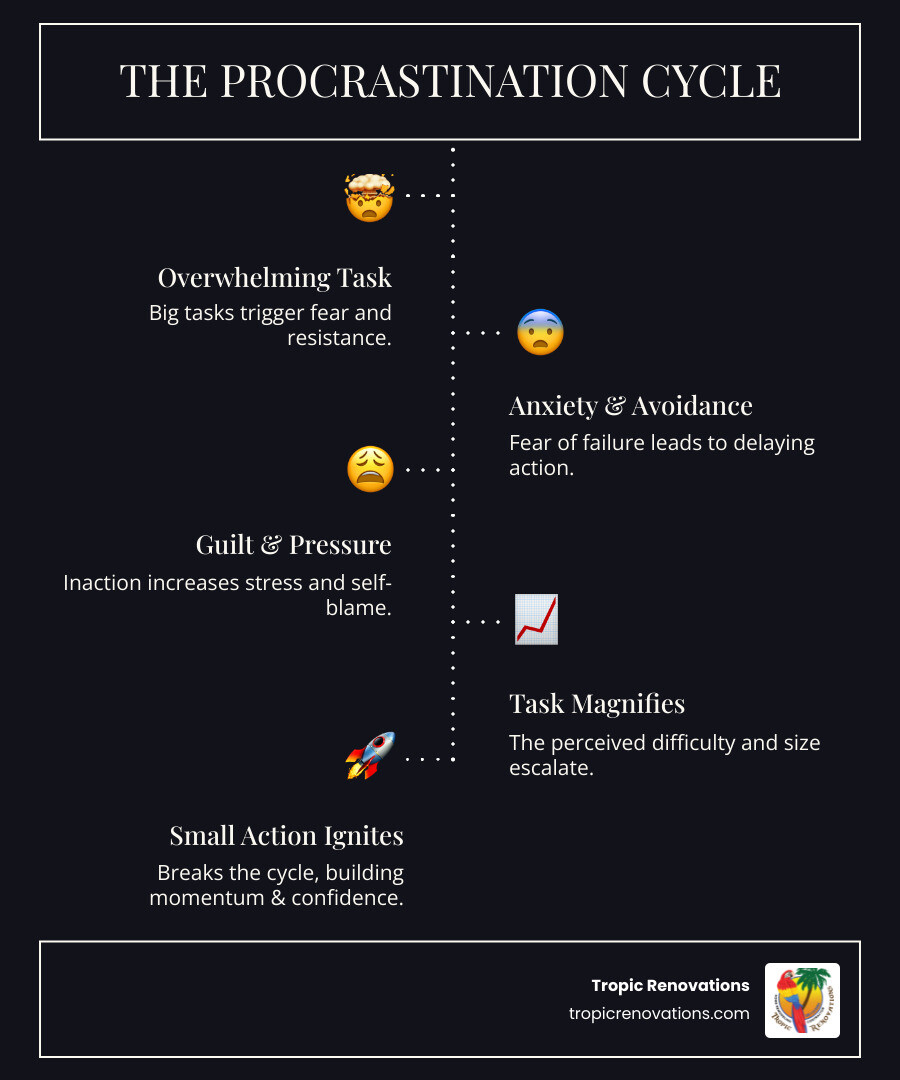
Understanding the Starting Block: Why We Procrastinate

Picture this: You’re sitting at your kitchen table, looking at that corner where the old cabinets are peeling and the countertop has seen better days. You know you want to remodel. You’ve been thinking about it for months. But every time you consider taking action, something invisible holds you back.
This isn’t laziness – it’s psychology at work. We procrastinate not because we don’t care, but because our brains are incredibly good at protecting us from perceived threats. And to our ancient wiring, anything new or challenging feels threatening.
The most common culprit behind procrastination is fear of failure. What if I choose the wrong contractor? What if the project goes over budget? Then there’s the fear of imperfection – that nagging voice saying it won’t turn out exactly like the Pinterest board you’ve been obsessing over. Sometimes it’s simply the fear of difficulty itself. We imagine how hard something will be and decide we’d rather avoid those uncomfortable feelings altogether.
This often leads to what psychologists call analysis paralysis. You research endlessly, bookmark dozens of articles, maybe even request a few quotes – but you never actually commit to moving forward. Sound familiar?
Why is it so hard to figure out how to get started?
The real challenge isn’t motivation – it’s lack of clarity. When we ask ourselves “How to get started?” on a big project, our brains often freeze because the task feels enormous and undefined.
Think about it: “I want to remodel my kitchen” is like saying “I want to climb a mountain.” Without knowing the specific path, the required steps, or even what the first move should be, your mind treats it as an impossible puzzle.
This overwhelm gets worse thanks to decision fatigue. Should you start by researching contractors or setting a budget? What about permits? Do you need an architect? Each small decision feels monumental when you’re already feeling stuck.
Meanwhile, your inner critic is having a field day. “You’re not good with home projects. Remember what happened with that bathroom tile? You’ll probably pick the wrong contractor and waste thousands of dollars.” These negative self-narratives become self-fulfilling prophecies that keep us paralyzed.
The Psychology of Resistance
Here’s something fascinating: our bodies naturally resist change through a process called homeostasis. Just like your thermostat keeps your house at a steady temperature, your brain tries to keep you in familiar, comfortable patterns.
Starting a home renovation – or any major project – disrupts this balance. It pushes you out of your comfort zone, which triggers a stress response. Your brain doesn’t distinguish between real danger and the perceived stress of making a big decision. It just knows something feels uncomfortable and tries to steer you back to safety.
This is why we often avoid tasks not because they’re actually difficult, but because we anticipate negative feelings. We imagine the frustration of dealing with contractors, the anxiety of spending money, or the overwhelm of making countless decisions.
We also tell ourselves powerful stories about our capabilities. As relationship expert Esther Perel explains, we all have “go-to-stories,” which put our lives and our behaviors into context. Maybe your story is “I’m not good with home improvement projects” or “Contractors always take advantage of me.”
These stories feel true because we’ve been telling them to ourselves for years. But here’s the thing – they’re just stories, not facts. And stories can be rewritten.
The good news? Once you understand why your brain resists starting, you can work with it instead of against it. The key is making that first step so small and specific that your comfort zone barely notices you’ve moved.
Practical Strategies: How to Get Started Now
Now that we understand why our brains resist starting, let’s tackle the real question: how to get started when everything feels overwhelming. The truth is, you don’t need to feel motivated to begin. In fact, motivation often comes after you start moving, not before.
Think of it like starting a cold car in winter. The engine might sputter and resist at first, but once it gets going, everything runs smoothly. Your brain works the same way. Those first few minutes are the hardest, but once you break through that initial resistance, momentum takes over.
The strategies below aren’t just theory – they’re practical tools that actually work. I’ve seen homeowners go from staring at their outdated kitchens for months to finally picking up the phone and scheduling their first consultation. The difference? They learned how to trick their brains into taking that first small step.
The 5-Minute Rule
Here’s a simple truth: five minutes is all it takes to go from panic to productivity. This isn’t motivational fluff – it’s a psychological hack that bypasses your brain’s natural resistance.
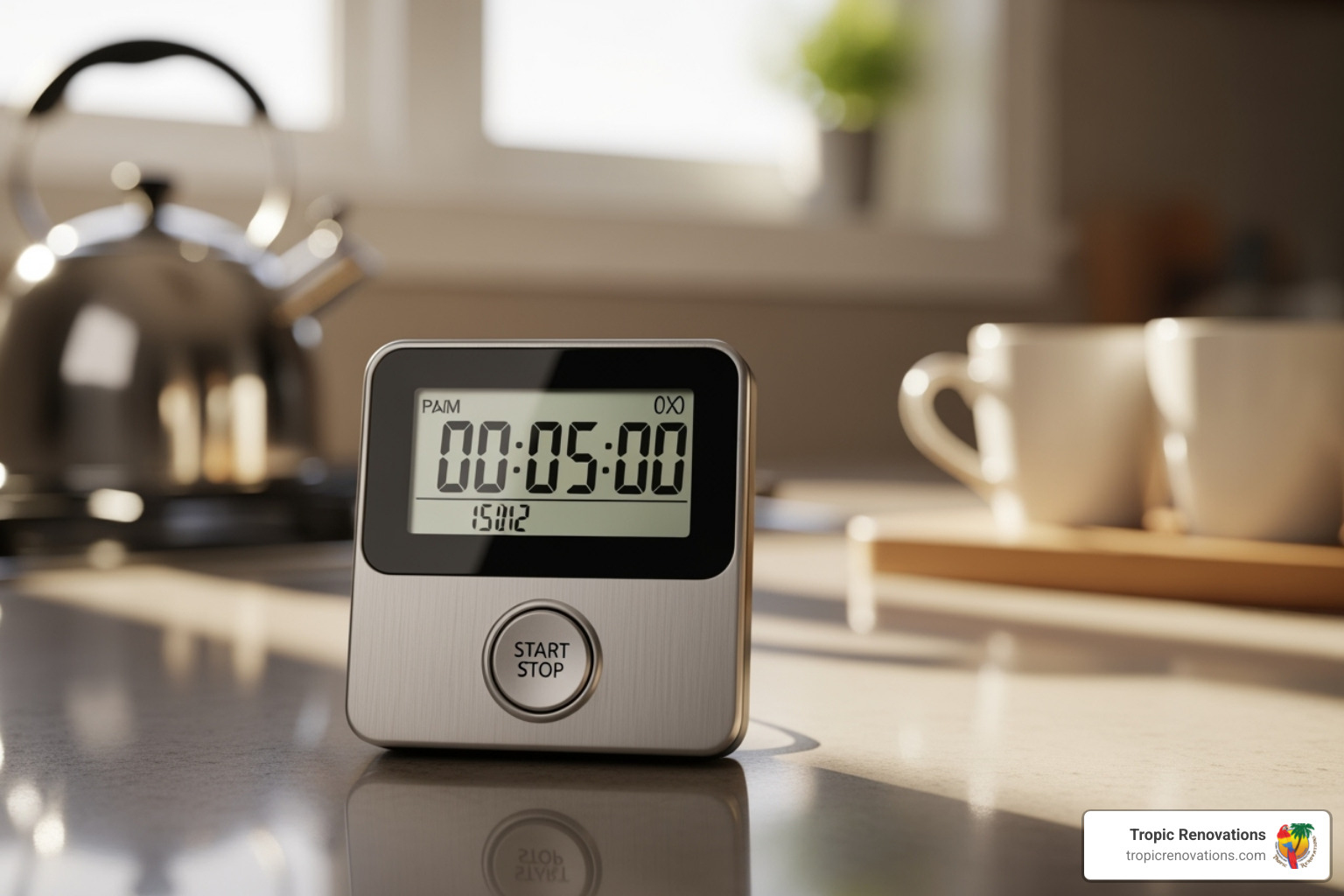
The rule is beautifully simple. Commit to working on your dreaded task for exactly five minutes. Not an hour, not even fifteen minutes. Just five. Set a timer if you need to.
Why does this work so well? Because five minutes feels completely manageable. Your brain can’t argue with five minutes. It’s not enough time to fail spectacularly or get overwhelmed. But here’s the magic: once those five minutes are up, you’ll often find yourself wanting to continue. You’ve already broken through the hardest part – the starting.
This approach is the foundation of time management techniques like the Pomodoro Technique, which breaks work into focused 25-minute chunks. But even five minutes can transform your relationship with difficult tasks, turning that paralyzing anxiety into actual progress.
The “Do First, Think Later” Mantra
We spend so much time thinking about doing things that we exhaust ourselves before we even begin. Your brain is constantly firing neurons when you think about doing something, sending signals throughout your body that something’s about to happen. The next step is simple: let your body take over.
Instead of planning every detail, just do the very first, smallest physical action. Want to start that home renovation? Don’t spend weeks researching every possible option. Pick up your phone and make one call. Want to declutter your garage? Don’t create a master plan. Walk out there and move one box.
This is about action over analysis. Your body often knows what to do before your mind catches up. When you take immediate physical action, you send a powerful signal to your brain that you’re serious about starting. You bypass all those mental roadblocks and just begin.
Done is better than perfect. That first action doesn’t need to be the right action – it just needs to be an action.
Create External Accountability
Sometimes, no matter how determined we feel, our internal motivation isn’t enough. And that’s perfectly okay. This is where support systems and external accountability become your secret weapons.
Sharing your goals with someone else creates a gentle pressure that internal motivation alone can’t match. Tell a friend you’ll have something done by Friday, and suddenly you have a reason to follow through. Find an accountability partner who checks in on your progress, or join a group of people working toward similar goals.
For bigger projects, especially complex ones like home renovations, professional help isn’t just about expertise – it’s about built-in accountability. When you work with a contractor, you’re not just getting their skills; you’re getting a structured process, clear deadlines, and a team dedicated to seeing your project through.
This is exactly why understanding how to find a reliable home remodel contractor is so important. You’re not just hiring someone to do the work – you’re creating an external system that ensures your renovation dreams actually happen.
At Tropic Renovations, we’ve seen how powerful this external accountability can be. When homeowners work with our licensed team in Sarasota & Charlotte County, they’re no longer wondering how to get started on their renovation. We guide them through each step, from initial planning to final walkthrough, making sure nothing falls through the cracks. Our commitment to completing projects in six months or less means you have clear timelines and expectations, not endless uncertainty.
Taming the Giant: Breaking Down Overwhelming Projects
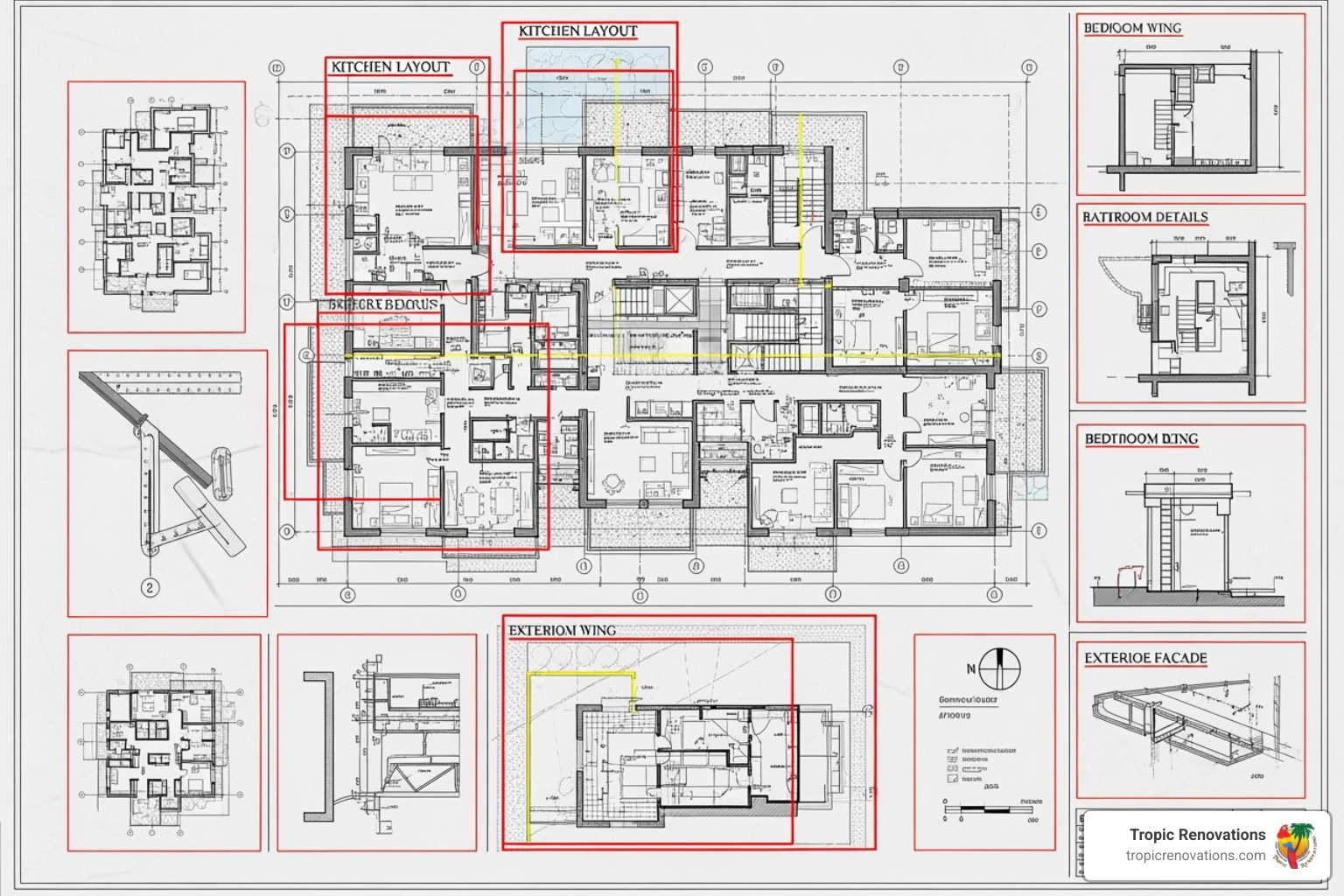
You know that feeling when you look at a massive project and your brain just… freezes? Maybe it’s a complete home renovation, or organizing years of paperwork, or finally tackling that novel you’ve been meaning to write. The project feels so enormous that even thinking about it makes you want to take a nap instead.
Here’s the thing: projects don’t feel overwhelming because they’re actually too big to handle. They feel overwhelming because we’re trying to eat the whole elephant in one bite. The secret to figuring out how to get started with these giants isn’t finding more motivation or clearing your entire calendar. It’s learning to be a master of deconstruction.
Think of it like this: every massive project is really just a collection of small, manageable tasks wearing a trench coat and pretending to be one huge monster. When you break down that “macro mission” into bite-sized “micro goals,” something magical happens. That terrifying mountain transforms into a series of gentle hills, each one completely walkable.
How to get started when a project feels overwhelming
The golden rule for overwhelming projects is surprisingly simple: identify the very first, tiniest step you can take right now. Not tomorrow, not next week – today. Don’t worry about step fifty-seven or what happens three months from now. Just focus on that first, almost embarrassingly small action.
Let me give you a real example from my world. When homeowners call us about a kitchen remodel, they’re often paralyzed by the enormity of it all. They’re thinking about demolition, permits, new cabinets, flooring, appliances, plumbing, electrical work – their heads are spinning before we even say hello.
So instead of diving into the whole project, we start ridiculously small. First step: make a list of three things you dislike about your current kitchen. That’s it. Maybe it’s the cramped layout, the outdated cabinets, or the lack of counter space. Next step: spend fifteen minutes looking at kitchen ideas online. Then, next step: make one phone call to discuss your vision.
Suddenly, that overwhelming renovation transforms into a series of completely doable actions. When you understand how to budget for your home remodel with a contractor, it becomes even clearer how breaking things down makes everything manageable. Questions like how long a bathroom remodel or how long a kitchen remodel takes stop being scary unknowns and become practical planning points.
[LIST] of First Steps for Common Daunting Tasks
Here’s how this “think tiny” approach works for other overwhelming projects:
Writing a book: Don’t think “write 300 pages.” Your mission today is write one terrible sentence. Tomorrow, make it two sentences.
Cleaning the house: Forget the entire house. Your only job right now is clear off your kitchen counter. That’s it.
Starting a fitness plan: Skip the marathon fantasies. Today, you put on your workout clothes. Tomorrow, you might walk to the mailbox in them.
Planning a remodel: Instead of designing your dream home, make one phone call to a design-build contractor. Understanding what is a design build contractor can be that perfect first step that makes everything else fall into place.
Learning a new language: Don’t aim for fluency by Friday. Learn one new word today. Use it in a sentence if you’re feeling ambitious.
The magic isn’t in the size of the step – it’s in the taking of it. Each tiny action creates momentum, and momentum is what transforms giants into completely manageable projects. Before you know it, you’re not asking “How to get started?” anymore. You’re already moving.
The Power of Mindset: Silencing Your Inner Critic
Here’s the truth: how to get started isn’t just about finding the right strategy or technique. It’s about changing the conversation happening inside your head. The way we think about a task profoundly impacts our ability to start it. If you approach something with dread, fear, or that familiar voice telling you you’re not good enough, you’re fighting an uphill battle before you even take the first step.
But here’s what I’ve learned after helping over 1,000 homeowners tackle their renovation dreams: that inner critic isn’t telling you the truth. It’s just trying to keep you safe and comfortable. The good news? You can learn to quiet that voice and reframe how you think about starting something new.
The secret lies in embracing imperfection and truly believing that “done is better than perfect.” This mindset shift alone can transform how you approach any daunting task, whether it’s finally calling about that kitchen remodel or tackling that cluttered basement.
Challenging Negative Self-Talk
We all have that voice. You know the one – it pipes up the moment you think about doing something challenging. “You’ll probably mess this up.” “Remember last time you tried something like this?” “You don’t know what you’re doing.”
This negative self-talk is one of the biggest roadblocks to figuring out how to get started on anything meaningful. But here’s what most people don’t realize: you don’t have to believe everything your inner critic tells you.
Start by acknowledging the voice without letting it control you. When it starts its familiar chatter, try asking it some pointed questions: “So what if it’s not perfect?” or “What’s actually the worst thing that could happen here?” Often, when you dig deeper, you’ll find that your fears are way bigger in your head than they would be in reality.
Instead of obsessing over the final outcome, focus on the process itself. The act of doing something, learning as you go, and improving along the way has value regardless of how things turn out. This shift takes the pressure off having to get everything right the first time.
Here’s a simple trick that works wonders: change “I have to” to “I choose to.” Instead of “I have to figure out this renovation,” try “I choose to create the kitchen I’ve always wanted.” This tiny language shift transforms an overwhelming obligation into an empowering decision you’re making for yourself.
The Importance of Just Starting (Imperfectly)
Remember Newton’s law? Objects in motion tend to stay in motion. This applies perfectly to your projects and goals. The most powerful way to overcome fear of failure or imperfection is to simply begin – even if your first steps are messy, uncertain, or incomplete.
Don’t wait for the perfect plan. Don’t wait until you feel completely ready. Don’t wait for ideal conditions. Just start where you are, with what you have.
Taking that first imperfect action creates something magical: momentum. It breaks the spell of inertia that’s been keeping you stuck. You start learning by doing, and often the “right” path only becomes clear once you’ve taken those first few wobbly steps. This is about putting yourself out there, embracing a little vulnerability, and understanding that progress beats perfection every single time.
Think about it like this: when we’re working on a home renovation, you don’t wait for every single design detail to be perfectly finalized before starting. You begin with the foundation, knowing you can adjust and refine as you go. Maybe you start by simply scheduling a consultation to discuss your vision. You can correct course along the way – that’s part of the process, not a flaw in it.
The crucial part is moving from standing still to taking action. Once you’re in motion, staying in motion becomes so much easier than you ever imagined.
Conclusion: From Inertia to Action
You now have the roadmap for conquering that universal struggle of getting started. We’ve journeyed together through the psychology of procrastination, uncovered why our brains resist new challenges, and armed you with proven strategies to break through that initial barrier.
The key takeaways are surprisingly simple: commit to just five minutes to overcome resistance, break overwhelming projects into tiny first steps, let your body lead with immediate action, and silence that inner critic by embracing imperfection. These aren’t just theories – they’re practical tools that work because they align with how our minds actually function.
Remember Newton’s First Law? Objects at rest tend to stay at rest, but objects in motion tend to stay in motion. The power of a single step cannot be overstated. That first awkward, imperfect action creates momentum that carries you forward. You don’t need perfect conditions, unlimited motivation, or a flawless plan. You just need to begin.
You have the tools to begin right now. Whether it’s writing that book, organizing your finances, starting a fitness routine, or finally tackling that home project you’ve been dreaming about, the same principles apply. Start small, start imperfectly, but most importantly – just start.
For those of you in Sarasota, Charlotte County, or throughout Southwest Florida who’ve been putting off that home renovation, we understand that figuring out how to get started can feel overwhelming. The good news? We’ve made it simple. With our comprehensive, dust-free renovation services and over 350 years of combined technician experience, we handle everything from concept to completion.
We specialize in kitchens and baths, completing projects in 6 months or less. Because we never subcontract our core trades, you get consistent quality and clear accountability throughout your renovation journey. No confusion, no finger-pointing – just a smooth, professional process that takes the guesswork out of starting your dream project.
Don’t let another month pass wondering what your home could become. The hardest part – figuring out how to begin – becomes effortless when you have the right partner. Start your home remodeling journey with us today. We’re ready to help you take that crucial first step from dream to reality.