
Install new toilet? Avoid 1 Costly Error!
Why Every Florida Homeowner Should Know How to Install New Toilet
Install new toilet? Yes, you can tackle this project yourself and save hundreds of dollars. Here’s what you need to know:
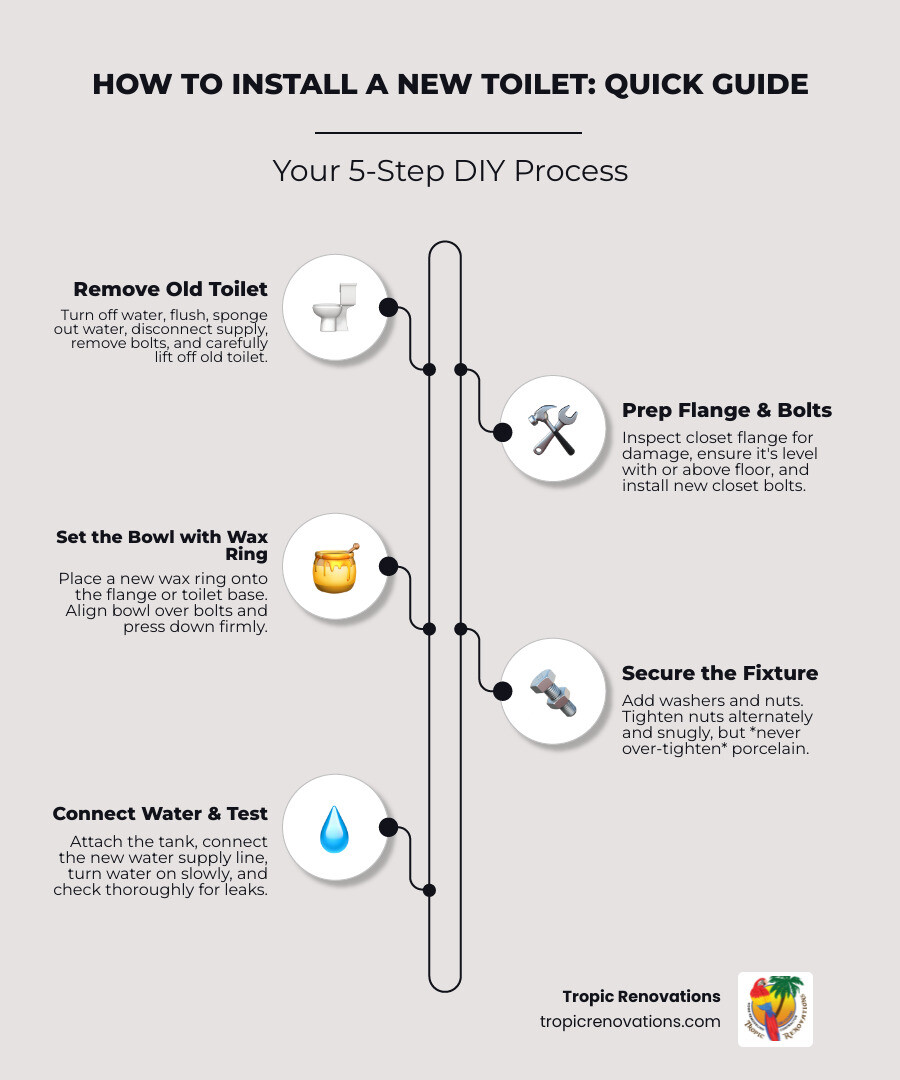
Quick Answer for Installing a New Toilet:
- Turn off water and remove old toilet
- Inspect flange – must be level with or above floor
- Place new wax ring on flange or toilet base
- Set toilet bowl and tighten bolts alternately (don’t over-tighten!)
- Attach tank and connect water supply line
- Test for leaks and adjust water level
Installing a new toilet might seem intimidating, but it’s a manageable DIY project. Most homeowners can complete this in 2-4 hours, saving $100-$250 in labor. Plus, upgrading to a water-efficient model can cut your water usage in half.
Many homeowners fear tackling toilet installation, but if you can follow directions, you’ve got this. Toilets are simple devices with just a few main components.
About 81% of bathroom injuries come from falls, so a properly installed, stable toilet is crucial for safety. Whether you’re replacing a leaky toilet or upgrading, doing it yourself gives you confidence and saves money.
I’m Jeff Lexvold, and with two decades in construction and home renovation at Tropic Renovations, I’ve helped countless homeowners Install new toilet fixtures safely. I’ve seen that with the right guidance, most people can successfully complete this project and feel proud of their work.
Quick Install new toilet? definitions:
Before You Begin: Tools, Materials, and Removing the Old Toilet
Getting ready to install new toilet fixtures? Proper preparation is half the battle and will save you from frustrating mid-project hardware store runs. The difference between a smooth installation and a stressful one comes down to having the right tools and materials ready.
Gathering Your Arsenal: Tools & Materials
Before you start, let’s gather your tools and materials.
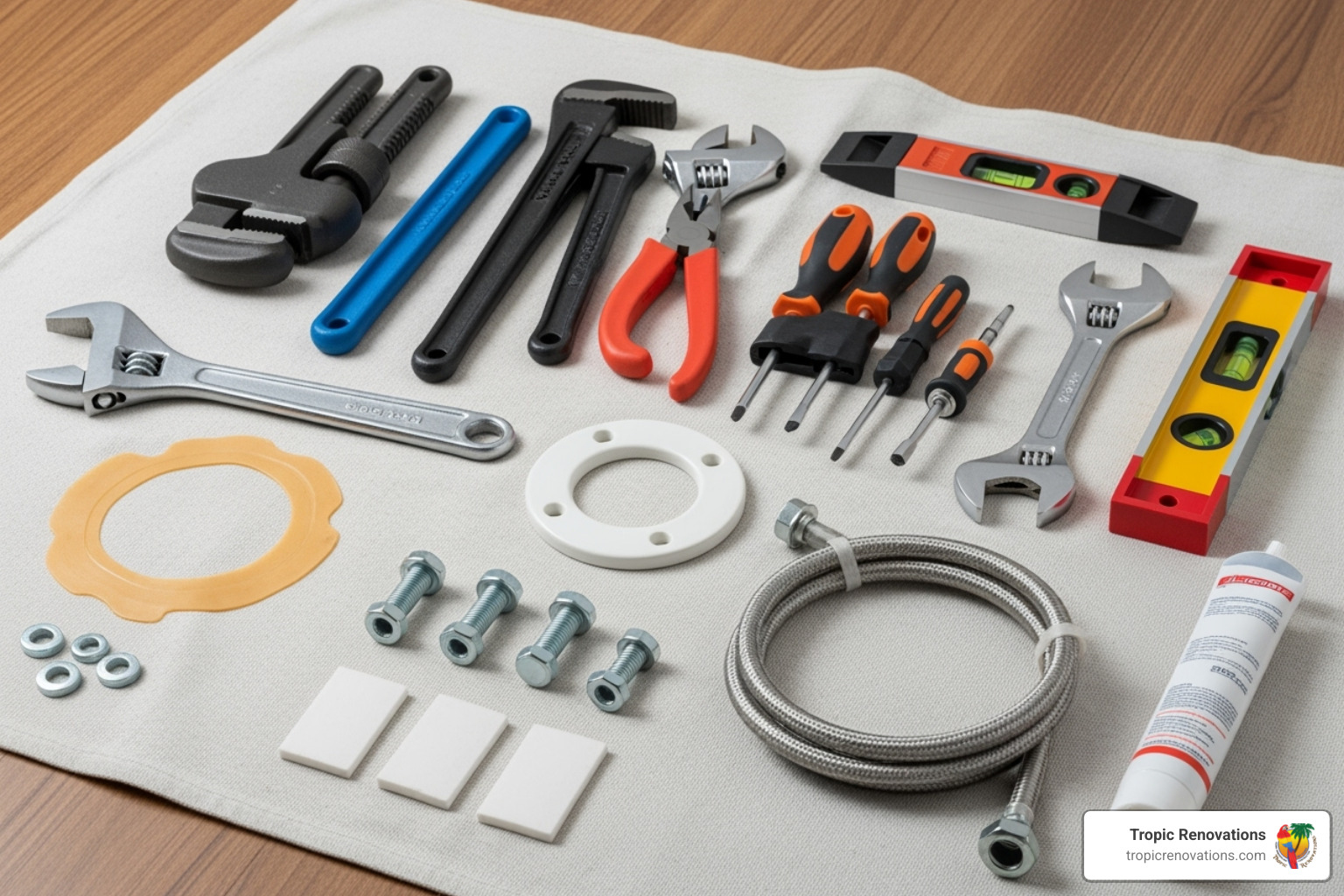
For tools, you’ll need an adjustable wrench, pliers, a screwdriver set, and a putty knife for scraping the old wax ring. Have a bucket and sponge ready for water, plus rags or old towels and rubber gloves. You might also need a hacksaw for rusted bolts (common in Florida), a utility knife, a small level, and a measuring tape.
For materials, start with your new toilet, making sure you’ve checked the rough-in measurement (usually 12 inches from wall to drain center). The wax ring is critical; I often recommend an extra-thick wax ring if your flange is low, or you can try a newer waxless seal. Always use new closet bolts (solid brass is best) and a new flexible water supply line (a steel braided line is worth it). Finally, have plastic toilet shims for leveling and plumber’s tape for threaded connections.
Out with the Old: Removing Your Existing Toilet
Now, let’s remove the old toilet. This is the messiest part, so be prepared.
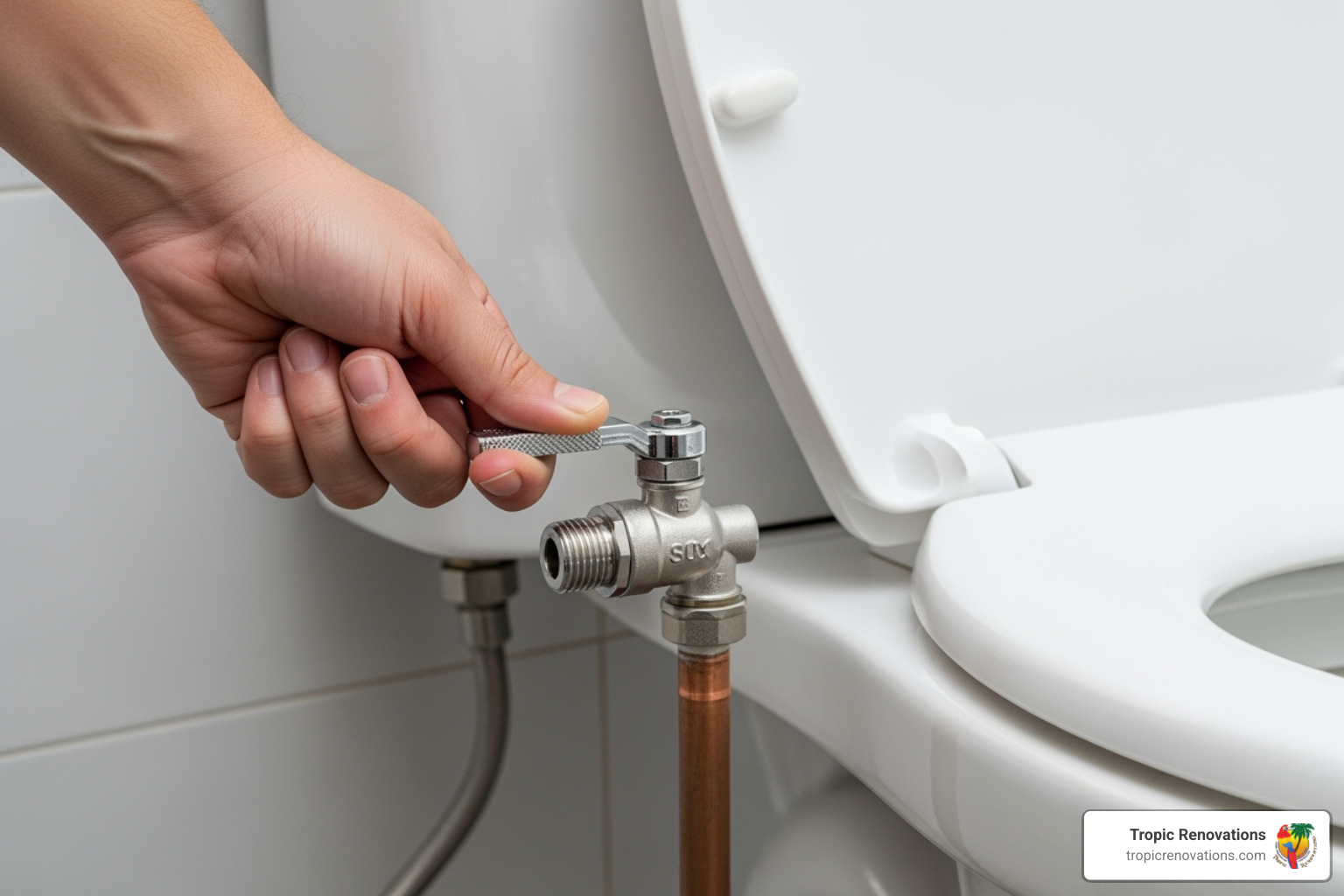
- Turn off the water supply at the shut-off valve. If there isn’t one, turn off your home’s main water supply.
- Flush the toilet to empty it, then use a sponge and bucket to remove any remaining water.
- Disconnect the supply line with your adjustable wrench, keeping a bucket underneath to catch drips.
- For two-piece toilets, remove the tank from the bowl first by unscrewing the nuts underneath. This makes the toilet much lighter.
- Pop off the decorative caps at the toilet base and unscrew the nuts and washers. If they’re rusted solid, cut them off with your hacksaw.
- Gently rock the toilet bowl to break the old wax seal. Lift the toilet straight up and set it on a tarp.
- Scrape off the old wax ring from the flange and floor. A clean surface is essential for a proper seal.
- Stuff a rag into the open drain pipe to block sewer gases and prevent anything from falling in.
For additional visual guidance on this process, check out this helpful resource on how to remove and replace a toilet yourself.
With the old toilet out and your workspace clean, you’re ready for the exciting part – installing your new throne!
The Main Event: How to Install a New Toilet?
Now that your old toilet is gone, it’s time to install new toilet and transform your bathroom. We’ll walk through each step together.
Preparing the Floor and Flange
The closet flange is the foundation of your installation, so it needs to be in good shape.
First, inspect your closet flange for cracks, chips, or corrosion. A damaged flange must be repaired or replaced before you continue.
Next, check the flange height. For a proper seal, the top of the flange should be level with or slightly above your finished floor. If it’s too low (often after new flooring is installed), use a flange extender or an extra-thick wax ring.
Clean the area thoroughly around the flange, removing all old wax and debris.
Finally, install your new closet bolts into the slots on the flange. Position them to align with the holes on your new toilet. Plastic washers included in most kits can help hold the bolts upright, making the next step much easier.
Setting the Bowl and Creating the Seal
This is the most critical step for preventing leaks, so take your time.
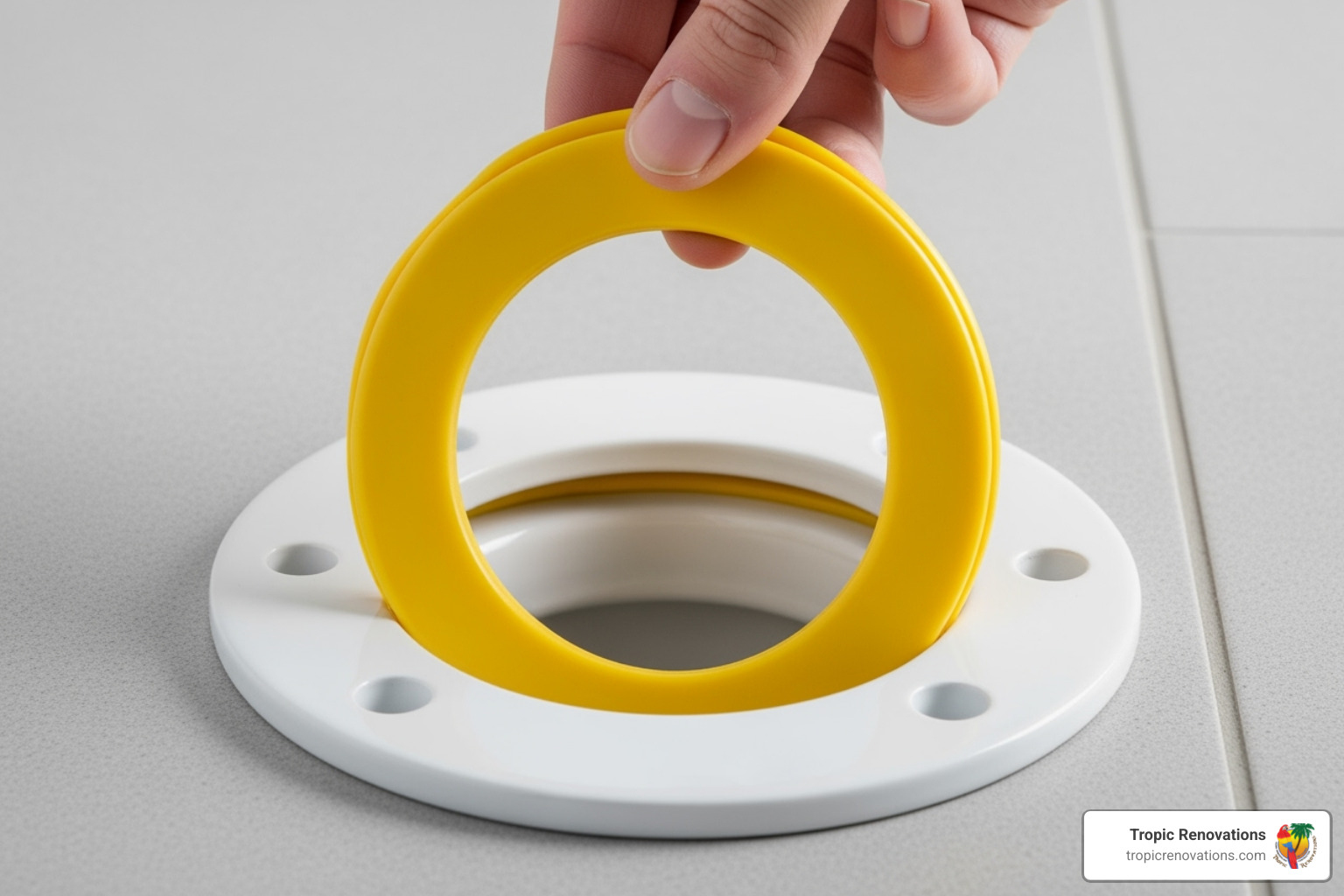
You can place your wax ring either centered on the flange or pressed onto the base of the new toilet bowl. I prefer attaching it to the toilet base to ensure it stays perfectly in place.
With a helper (toilets are heavy!), carefully align and lower the toilet bowl over the closet bolts.
Lower the toilet straight down onto the wax ring. Press down firmly and evenly on the bowl to compress the wax. Golden rule: once that toilet touches the wax ring, don’t twist or rock it. Any movement can break the seal, and you’ll have to start over with a new ring.
Place a washer and nut on each closet bolt. Hand-tighten first, then use your wrench to tighten them alternately—a little on one side, then the other. The goal is snug, not tight. Over-tightening is the #1 cause of cracked toilet bowls.
Trim any excess bolt length with a hacksaw, then snap on the decorative bolt caps for a finished look.
Assembling the Throne: Attaching the Tank and Connecting Water
We’re in the home stretch! Let’s attach the tank and connect the water.
For two-piece toilets, install the tank-to-bowl gasket over the flush valve opening on the tank’s underside.
Place the tank onto the bowl, aligning the bolt holes. Insert the tank bolts from inside the tank and secure them with washers and nuts from underneath. Again, tighten evenly and alternately until the tank is stable but not over-tightened.
Attach your new water supply line to the fill valve under the tank and to the shut-off valve on the wall. Hand-tighten both connections first to avoid cross-threading, then give each a final quarter-turn with your wrench.
Turn on the water slowly and watch carefully for any leaks at the connections—the supply line, the tank bolts, and between the tank and bowl.
Once the tank is full, check the water level. It should sit just below the overflow tube. If it’s too high or low, adjust it using the mechanism on the fill valve.
Congratulations! You’ve successfully completed the main installation. Your new toilet is ready for its first test flush.
After the Install: Troubleshooting, Maintenance, and When to Call a Pro
Congratulations! You’ve successfully steered the main installation process. But we’re not quite finished yet. A few final checks and some long-term care will ensure your new toilet serves you faithfully.
What are common troubleshooting tips for an “Install new toilet?” project?
Even the best DIY projects can have hiccups. Here’s how to fix the most common issues:
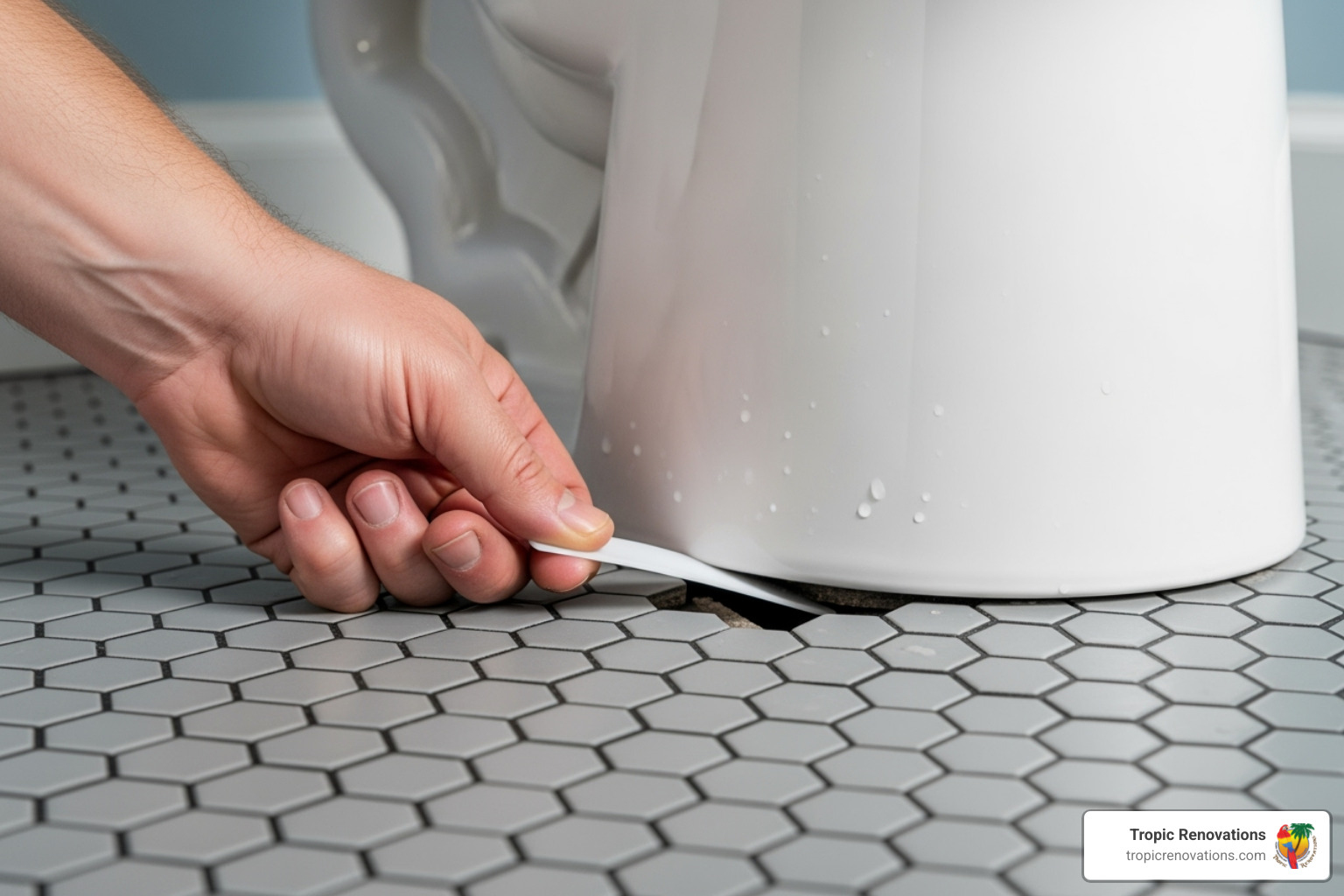
- Rocking toilet: If your toilet wobbles, first check that the closet bolts are snug (not over-tightened). If it still rocks, the floor is likely uneven. Slide plastic shims under the base until it’s stable, then trim the excess with a utility knife. Avoid wood shims, which can rot in Florida’s humidity. For significantly uneven floors, consider new Best Bathroom Tiles in a future remodel.
- Leaks at the base: Water seeping from the base after flushing means a failed wax ring. You’ll have to remove the toilet, scrape off the old wax, and install a new ring.
- Tank bolt leaks: If you see drips between the tank and bowl, try gently tightening the tank bolts alternately. If that fails, you may need to remove the tank and check the gaskets.
- Supply line leaks: These are often the easiest fix. Give the connections a gentle quarter-turn with a wrench. If it still leaks, turn off the water, disconnect the line, and re-secure it, possibly with new plumber’s tape.
Finishing Touches and Long-Term Care
A few final details will ensure your toilet looks professional and lasts for years.
- Caulking: To caulk or not? We suggest a compromise: caulk around the base for a clean look, but leave a small gap at the very back. This provides stability while allowing any future leaks to be seen immediately.
- Toilet Seat: Install your toilet seat according to the manufacturer’s instructions.
- Long-Term Care: Clean regularly with non-abrasive cleaners to protect the finish. Periodically check for leaks around the base and connections.
- Annual Maintenance: Inspect the flapper and fill valve annually. If your toilet runs constantly or fills slowly, these parts likely need replacing. A good wax ring seal can last 20-30 years.
When should a homeowner hire a professional for an “Install new toilet?” project?
While DIY is rewarding and saves $100-$250 in labor, some situations are best left to professionals like our team at Tropic Renovations.
Call a pro for:
- Damaged or low closet flanges: Repairing a cracked, broken, or low flange can be complex, sometimes involving subfloor work.
- Subfloor water damage or rot: If the floor around the toilet is soft or discolored, it’s a sign of a serious structural issue that needs professional assessment.
- Moving plumbing lines: Relocating a toilet requires altering drain and water lines, which is a job for a licensed plumber to ensure code compliance.
- Complex toilet types: Wall-mounted units, bidets, or toilets with Smart Bathroom Features have unique installation needs.
- If you’re unsure: A botched DIY job can be costly to fix.
If your toilet installation is part of a larger Cost of Bathroom Remodel, it’s wise to have a professional team handle the plumbing. A professional installation buys you peace of mind and a job done right the first time.
Frequently Asked Questions about Installing a New Toilet
After helping hundreds of homeowners tackle this project, we’ve heard just about every question you can imagine. Here are the three most common ones.
How long does it take to install a toilet?
The typical timeframe to install new toilet is 2 to 4 hours for a DIYer, but we always advise planning for longer, especially for first-timers. Rushing leads to mistakes.
Unexpected issues can add significant time, such as a rusted bolt, a damaged flange, or an uneven floor. Removing the old toilet also adds 45-60 minutes to the project. As a DIYer, your goal isn’t speed—it’s getting it right the first time.
Can I reuse the old wax ring or bolts?
Absolutely not. This is one area where you should never cut corners.
A new wax ring is essential for a leak-proof seal. Once compressed, a wax ring cannot be reused. Trying to reuse one will lead to leaks.
The same goes for closet bolts. Always use new hardware. Old bolts can be corroded, weakened, or may not fit properly, risking instability. For a few dollars in new parts, you ensure your new toilet is secure and leak-free for years.
What’s the most common mistake when installing a toilet?
Over-tightening the bolts is the #1 mistake when homeowners install new toilet fixtures. Porcelain is fragile and can easily crack under too much pressure.
Remember: the wax ring creates the watertight seal, not the force of the bolts. This applies to both the floor bolts and the tank bolts.
Our foolproof approach: hand-tighten first, then use your wrench for only a quarter to half-turn more. Alternate between bolts for even pressure. The toilet should feel snug and stable, not cranked down as tight as possible. If it doesn’t rock, it’s secure.
Your New Throne Awaits
Congratulations! You’ve conquered the challenge to install new toilet in your home. You should feel proud of this accomplishment. You’ve learned a valuable skill, upgraded your bathroom, and saved $100-$250 in labor costs.
Plus, your new water-efficient toilet can cut water usage in half, saving you money and conserving water in our Southwest Florida region. This project is a symbol of your willingness to learn, save money, and take control of your home maintenance.
Of course, not every project is this straightforward. When you’re ready for larger renovations or encounter challenges beyond your comfort zone, our experienced team at Tropic Renovations is here to help. Our dust-free renovation process keeps your home clean during any project, from Small Bathroom Solutions to a full Master Bathroom Remodel Cost change.
We support both avid DIYers and homeowners who prefer to leave complex work to professionals. Whatever your comfort level, we’re here for you.
Ready to explore what’s possible for your bathroom? Contact us for all your bathroom remodeling needs in Sarasota and Charlotte County. We bring dream bathrooms to life with quality craftsmanship and exceptional service.