
What architects look at when finding a home remodeling contractor: Elite 2025
Why Understanding the Architect’s Selection Process Matters
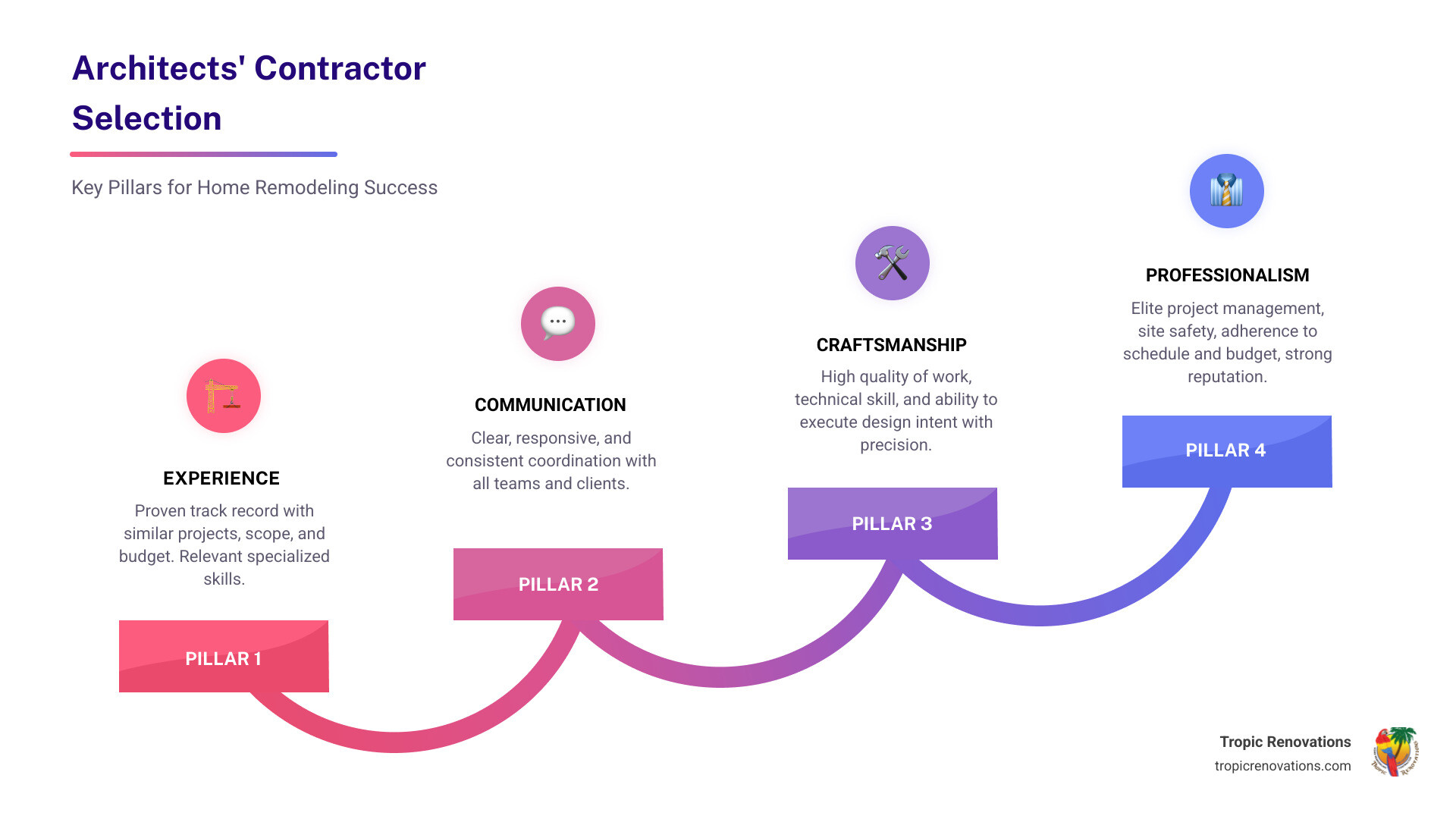
What architects look at when finding a home remodeling contractor follows a proven framework that homeowners can use to find the best renovation partners. When architects select contractors, they focus on five critical areas:
- Experience and Portfolio – Similar project scope, budget, and specialized skills
- Aesthetic Alignment – Understanding design intent and attention to detail
- Strong References – Verified client testimonials and industry reputation
- Communication Skills – Clear, responsive coordination with all project teams
- Project Management – Effective oversight of workers, materials, and timelines
Architects have learned through decades of collaboration that the right contractor can make or break a project. As one industry expert noted, “the chemistry between a pro and client can make or break a project.” This careful vetting process ensures projects stay on schedule, within budget, and meet exacting design standards.
The stakes are high – architects’ reputations depend on flawless execution of their vision. They can’t afford to work with contractors who cut corners, miss deadlines, or fail to understand complex design requirements. This is why they’ve developed such rigorous selection criteria.
As Jeff LEXVOLD, I’ve worked on over 1,000 home renovations during my two decades in construction before starting Tropic Renovations. My experience has shown me what architects look at when finding a home remodeling contractor – and how these same standards can help homeowners avoid costly mistakes and delays. Understanding this professional approach will transform how you evaluate potential renovation partners.
What architects look at when finding a home remodeling contractor vocab to learn:
The Blueprint for Quality: What Architects Look at When Finding a Home Remodeling Contractor
When an architect starts on a new residential project, their first thought isn’t just about the design itself, but who will bring that design to life. The contractor is the crucial link between concept and reality. This is why architects employ a meticulous vetting process, focusing on criteria that ensure not just technical proficiency, but a true partnership.
Experience and a Powerful Portfolio
Experience isn’t just a number; it’s a testament to a contractor’s proven track record. Architects look for contractors who have successfully completed projects of similar scope and budget. For instance, if we’re designing a complex modern home, an architect will seek a contractor with an impressive portfolio of similar modern-style builds. It’s not enough to simply have “experience” – it needs to be relevant experience.
Contractors often have specialized expertise, like building homes on a steep hillside, or those fully wheelchair accessible. Architects highly value this kind of niche knowledge. For historic preservation projects, architects specifically advise looking for contractors with at least five years of experience on similar preservation projects, ensuring they understand the nuances of working with older structures.
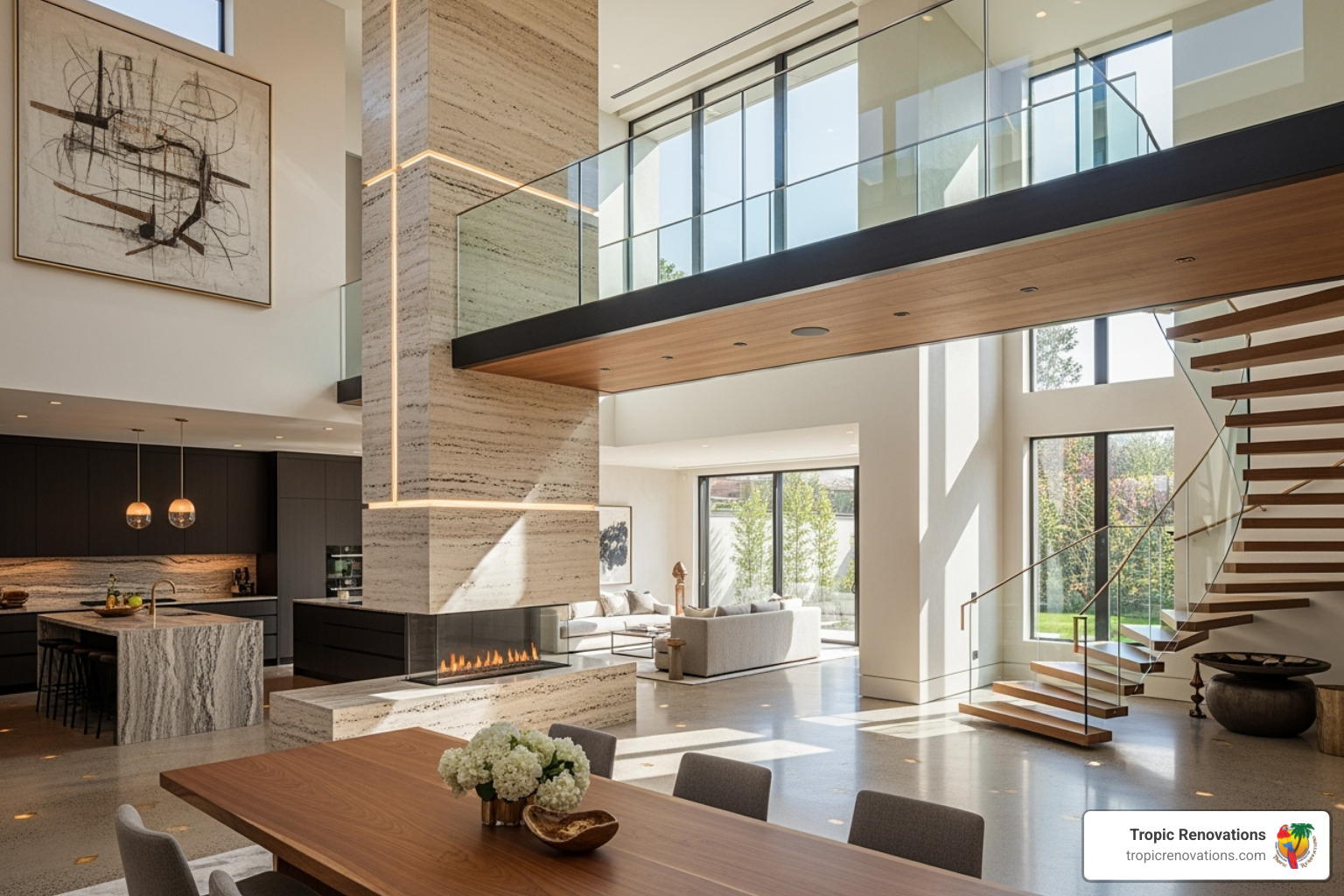
When we review a contractor’s portfolio, we’re not just admiring pretty pictures. We’re scrutinizing the quality of finishes, the complexity of past work, and evidence of a keen eye for detail. A strong portfolio speaks volumes about a contractor’s technical skill, craftsmanship, and problem-solving ability, giving us confidence that they can translate intricate designs into tangible, high-quality results.
Ready to see how our expertise translates into beautiful results? View our past projects.
Aesthetic and Design Alignment
This might sound like an abstract concept, but for architects, it’s incredibly concrete. Aesthetic alignment means that a contractor’s past work and overall approach resonate with the design vision for the new project. We look for contractors who not only understand our plans but also share our design sensibility.
It’s about more than just following instructions; it’s about executing design intent. Does the contractor appreciate the subtle curves, the precise angles, or the specific material textures that are central to the design? Do they have a deep knowledge of materials and how they perform, ensuring the final product looks and feels as intended? This shared vision and attention to detail are paramount. If a contractor’s portfolio doesn’t align with the desired style, especially for a modern-style home, it’s a clear indicator that they might not be the right fit.
The Importance of Strong References and Reputation
For architects, strong references are non-negotiable. While we often have established networks of trusted professionals, there are times when we need to work with a new contractor. In these instances, references become crucial. We want to hear directly from past clients about their experience, not just about the finished product, but about the process, communication, and problem-solving.
But it doesn’t stop there. We also dig into a contractor’s industry reputation, including their relationships with subcontractors. A contractor who consistently pays their subs on time and fosters good working relationships is more likely to have a reliable and skilled team on our projects.
We also go a step further, checking a contractor’s record with the state’s consumer protection agency for any conflicts with clients or subcontractors. This due diligence ensures we’re partnering with a reputable firm that adheres to ethical business practices. After all, most successful remodeling businesses attribute over 50 percent of their annual volume to customer referrals, with some even reaching 90 percent or more. This statistic underscores the power of a solid reputation and positive word-of-mouth.
Don’t just take our word for it—see what our clients have to say. Read our testimonials.
Beyond the Blueprints: Essential Soft Skills and Management Prowess
While technical skill and a stunning portfolio are essential, architects understand that a project’s success hinges equally on a contractor’s soft skills and management capabilities. It’s about more than just building; it’s about collaborating, communicating, and problem-solving in ways that keep complex projects running smoothly.
Communication as the Cornerstone of Collaboration
When architects evaluate what architects look at when finding a home remodeling contractor, communication skills top the list every time. Think about it – a typical renovation involves designers, engineers, subcontractors, suppliers, and homeowners all working toward the same goal. Without clear communication, even the most talented team can quickly fall apart.
The best contractors act as the central hub for all project communication. They coordinate teams seamlessly, provide regular client updates, and respond quickly to emails and phone calls. Many top contractors now use project management software to keep everyone in the loop, making it easy to track progress and share updates in real-time.
Architects particularly value contractors who are proactive communicators. Instead of waiting for problems to escalate, they flag potential issues early and propose solutions. This kind of responsiveness builds the trust that’s essential for any successful architect-contractor partnership.
For homeowners looking to apply these same standards, How to find a reliable home remodel contractor offers practical guidance on evaluating communication skills during your contractor search.
Elite Project Management and Professionalism
Great contractors are master orchestrators who juggle multiple moving parts without missing a beat. They excel at managing subcontractors effectively, creating realistic schedules that account for material deliveries and weather delays, and keeping projects within budget through careful material procurement.
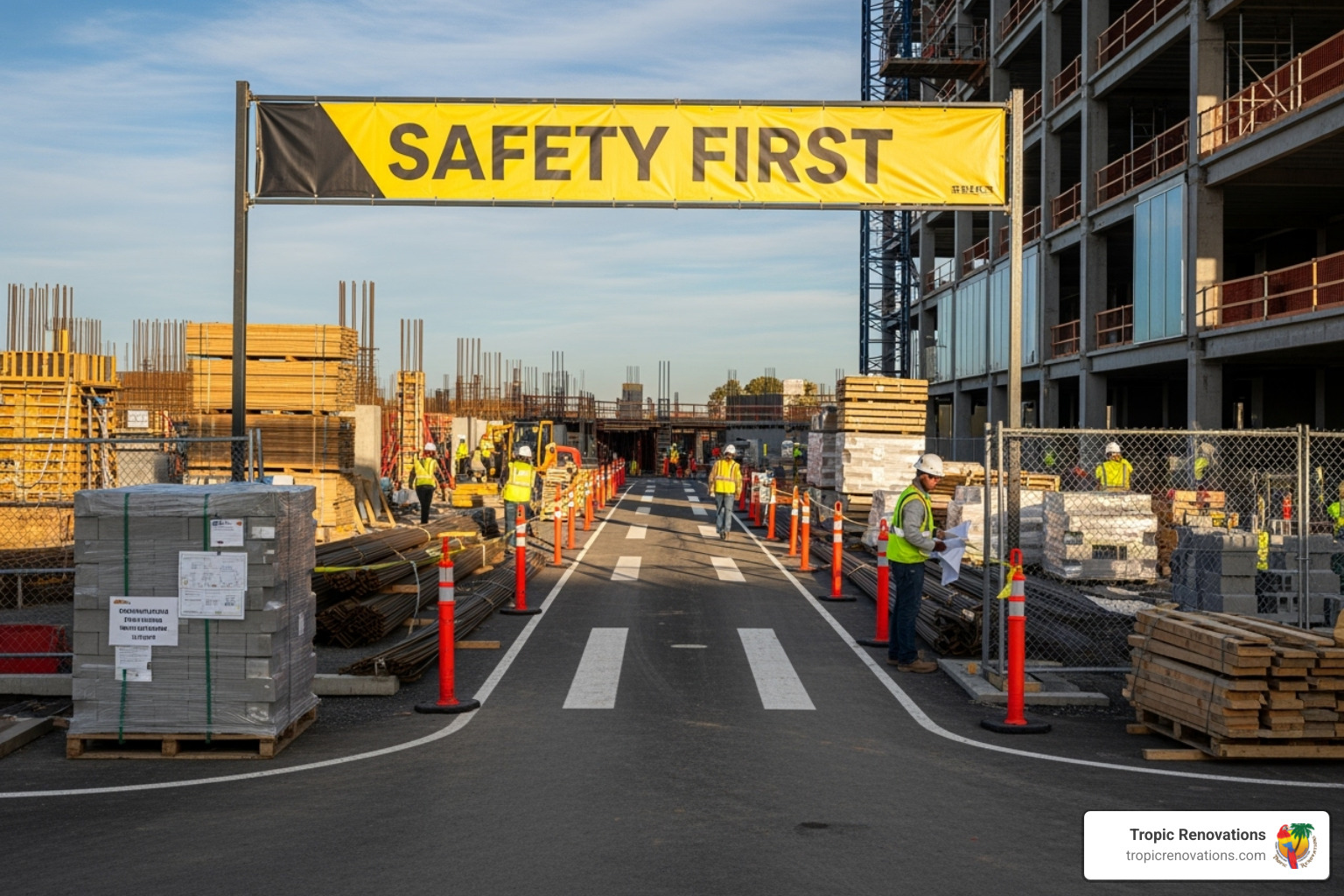
But professionalism goes beyond just logistics. When architects visit job sites, they notice everything – from how clean and organized the work area is to how respectfully workers treat the homeowner’s property. A neat and safe construction site isn’t just about appearances; it reflects a contractor’s discipline and attention to detail.
The best contractors understand that they’re working in someone’s home, not just another construction site. Their teams show respect for property by protecting existing finishes, cleaning up daily, and minimizing disruption to the family’s routine. This level of professionalism gives architects confidence that their clients will have a positive experience throughout the renovation process.
Wondering about the value of professional project management? Can you remodel your home without a general contractor? explores what happens when homeowners try to manage complex renovations themselves.
Emulating the Pros: What architects look at when finding a home remodeling contractor that homeowners can replicate
The rigorous vetting process that architects use can absolutely be adapted for homeowners. The key is asking the right questions during your interviewing contractors phase. Start with basics like how long they’ve been in business and who will supervise your project day-to-day.
Dig deeper into their approach by asking about their project management style and how they handle unexpected challenges. Find out if they’re full-service or specialty contractors, and whether they offer design services or if you’ll need separate professionals for that work.
Always verify their credentials – ask for copies of insurance verification and workers’ compensation certificates. Request at least three references from similar projects, and if possible, visit some of their completed jobs. Professional contractors should also provide detailed bids that break down materials, labor, and profit margins.
When it comes to payment schedules, architects recommend starting with 10% at contract signing, followed by progress payments tied to completed milestones, with the final 15% due upon completion. This approach protects both you and the contractor while ensuring steady project progress.
Understanding these financial aspects is crucial for project success. Learn more at How to budget for your home remodel with a contractor.
Choosing Your Professional Team: Architect, Designer, or Design-Build?
When you’re planning a home renovation, understanding who does what can feel overwhelming. Should you hire an architect, a residential designer, or go with a design-build firm? Each professional brings different skills to the table, and knowing these differences will help you build the perfect team for your project.

Architect vs. Residential Designer
Think of architects and residential designers as cousins in the design world – they’re related, but they have different strengths and legal responsibilities.
| Feature | Residential Architect | Residential Designer |
|---|---|---|
| Formal Training | Extensive university education (5-7+ years), accredited programs | Varies; may have degrees, certifications, or experience-based training |
| Licensing | Legally required to be licensed (e.g., by state boards) | Generally not licensed, though some may have certifications |
| Scope of Work | Overall exterior design, structural aspects, complex layout changes, additions, building permits, official construction documents | Interior style, functionality, space planning, material selection, redesigning existing spaces (less focus on structural changes) |
| Legal Authority | Can stamp plans for building permits and code compliance | May create construction plans, but often require an architect’s stamp for structural changes or permits |
| Focus | Big-picture design, structural integrity, regulatory compliance | Aesthetic details, interior flow, finishes, furnishings |
Architects go through years of rigorous training and must pass licensing exams. They’re your go-to professionals for major structural changes, additions, or when you need official construction documents. They think about the big picture – how your home sits on the lot, structural integrity, and making sure everything meets building codes.
Residential designers often shine when it comes to interior spaces and functionality. They’re fantastic at reimagining your existing layout, selecting materials, and creating beautiful, livable spaces. While some can handle certain structural changes, their sweet spot is usually interior changes.
If you’re leaning toward hiring an architect, start with your local American Institute of Architects chapter. Find a local AIA chapter to connect with licensed professionals in your area.
The Design-Build Advantage
Here’s where things get interesting. The traditional approach means hiring an architect first, then getting bids from contractors – it’s called the design-bid-build model. But there’s a streamlined alternative that many homeowners find much easier: design-build.
In a design-build approach, one firm handles both the design and construction under a single contract. Think of it as having your entire renovation team under one roof.
The benefits are pretty compelling. You get an integrated approach where designers and builders collaborate from day one, instead of trying to coordinate between separate companies. There’s a single point of contact – no more playing phone tag between your architect and contractor when issues arise.
Streamlined communication means problems get solved faster. When the design team and construction crew work for the same company, they can hash out solutions quickly without separate billing or scheduling conflicts.
The cost efficiency can be significant too. Traditional architectural services often charge 10-15% of your project cost in fees, and those hourly rates can add up quickly. Design-build contractors are motivated to design efficiently because they’re also responsible for building within your budget.
Finally, the faster timeline often surprises homeowners. When design and construction teams work together from the start, projects typically move more smoothly and finish sooner.
This integrated approach ensures your project meets your vision while staying within budget – which is exactly what architects look at when finding a home remodeling contractor for their own projects.
Ready to meet a team that brings your vision to life? Learn more about our team.
Verifying Credentials: A Non-Negotiable Step
No matter which professional you choose, checking credentials isn’t optional – it’s essential protection for your investment.
Licensed contractor benefits go way beyond just having a piece of paper on the wall. Licensed contractors have undergone training, background checks, and meet industry standards. They’re also required to carry proper insurance, which protects you if something goes wrong.
Insurance verification is crucial. Always ask for proof of workers’ compensation coverage. If a contractor doesn’t carry this insurance, you could become legally responsible for any injuries that happen on your property. That’s a risk no homeowner should take.
Workers’ compensation isn’t just about protecting workers – it protects you too. Make sure any contractor you hire can provide current certificates of insurance.
For California residents, you can easily verify a contractor’s license and check their history. Check a contractor’s license with the CSLB to see if they’re properly licensed and if there are any complaints on file.
State boards typically license individual professionals, not companies. So when you’re working with an architectural firm, make sure the person you’re dealing with is the actual licensed architect whose name appears on the credentials.
Taking these verification steps might seem like extra work, but they’re the same background checks that architects perform when selecting contractors. It’s professional due diligence that can save you from costly problems down the road.
Frequently Asked Questions about Hiring Renovation Professionals
Homeowners often ask us similar questions when they’re starting their renovation journey. These questions reveal the same concerns that drive what architects look at when finding a home remodeling contractor – understanding roles, managing expectations, and ensuring project success.
When do I need an architect versus a general contractor?
The scope and complexity of your project determines whether you need an architect, a general contractor, or both. Many homeowners get confused about these roles, but the distinction is actually straightforward.
You typically need an architect when your renovation involves structural changes like tearing down or adding walls, especially load-bearing ones. Major layout changes that significantly alter your floor plan also require architectural expertise. If you’re building additions onto your home or moving utilities like plumbing or gas lines, an architect becomes essential.
Permit requirements often dictate the need for an architect too. Any changes requiring approval from the Department of Buildings need stamped plans that only licensed architects can provide. Historic or landmark properties especially benefit from architectural guidance to steer preservation requirements.
A general contractor becomes invaluable for almost any significant renovation, regardless of whether you need an architect. They oversee the entire construction process, manage subcontractors, obtain permits, and keep your project on schedule and within budget. For complex projects involving multiple trades like electrical, plumbing, and carpentry, a general contractor is essential even when an architect handles the design.
Whether you’re planning a major overhaul or a focused update, our Kitchen Remodeling services can help bring your vision to life.
What are the typical phases of an architectural design project?
Understanding the architectural design process helps you know what to expect and when decisions need to be made. Each phase builds naturally on the previous one.
Initial consultation and site analysis kicks off the process. Your architect assesses your needs, vision, and budget while examining existing site conditions. They develop a design brief outlining your project goals – think of this as your project’s roadmap.
Schematic design comes next, where initial sketches and conceptual drawings explore different design options and spatial relationships. This phase focuses on overall form and function rather than specific details.
Design development refines your chosen schematic design with much more detail. Your architect selects specific materials, systems like HVAC and plumbing, and finishes, integrating everything into a cohesive design.
Construction documentation produces the detailed drawings and specifications (blueprints) that contractors use for bidding and construction. These documents ensure building code compliance and give contractors clear direction.
Bidding and negotiation often involves your architect helping solicit contractor bids and evaluating proposals. Finally, construction administration continues throughout the build, with your architect reviewing contractor submittals, making site visits, addressing design issues, and conducting the final walk-through to create a punch list.
Ready to transform your private retreat? Explore our Bathroom Remodeling services.
How do I ensure a smooth renovation process once I’ve hired my team?
Even with the best team, a smooth renovation requires your active participation. The same principles that guide what architects look at when finding a home remodeling contractor – clear communication, professionalism, and proper planning – apply to managing your project.
Clear communication forms the foundation of success. Establish clear lines of communication from day one, provide timely feedback, ask questions, and address concerns promptly. Architects always advise being actively involved in the design process rather than stepping back completely.
Written contracts protect everyone involved. Always have detailed written contracts with both your architect and contractor outlining scope of work, services provided, project timeline, fee structure, payment schedule, and change order processes.
Setting realistic expectations prevents frustration later. Discuss potential challenges, timelines, and disruption levels upfront. Understand that unforeseen issues like finding mold or structural damage can cause delays and budget adjustments – this is normal in renovation work.
Regular meetings with your team keep everyone aligned. Schedule these to review progress, discuss upcoming phases, and make necessary decisions. Understanding the change order process becomes crucial since changes to the original plan need proper handling and pricing.
Avoiding common mistakes saves time and money. Don’t rush the design phase, be clear about your budget from the start, don’t ignore professional advice, and always get agreements in writing. Before making final payment, conduct a thorough walk-through with your contractor and architect to create a “punch list” of remaining items needing attention.
Conclusion: Adopting the Architect’s Mindset for a Flawless Renovation
When you understand what architects look at when finding a home remodeling contractor, you’re essentially getting a masterclass in making smart renovation decisions. It’s like having a seasoned professional guide you through the process, helping you avoid the pitfalls that can turn dream projects into costly nightmares.
The architect’s approach isn’t complicated, but it is thorough. They focus on proven experience with relevant projects, aesthetic alignment that ensures your vision comes to life, strong references that speak to reliability, clear communication that keeps everyone on the same page, and elite project management that delivers results on time and within budget.
This systematic vetting process isn’t just professional best practice—it’s your roadmap to renovation success. When you adopt this mindset, you’re not just hiring a contractor; you’re building a partnership with someone who truly understands your project’s unique demands.
The value of thorough vetting cannot be overstated. A careful selection process protects your investment, prevents delays, and ensures the final result matches your expectations. It’s the difference between a renovation that adds value to your life and one that becomes a source of stress and regret.
At Tropic Renovations, we’ve built our reputation on meeting these exact standards that architects demand. Our team brings over 350 years of combined experience to every project, and we’ve perfected our dust-free renovation process to minimize disruption to your daily life. We specialize in kitchens and bathrooms throughout Sarasota & Charlotte County, completing most projects in six months or less.
What sets us apart is our commitment to never subcontract our core trades. This means consistent quality, clear accountability, and the kind of seamless communication that makes the difference between a good renovation and a remarkable one.
Your home deserves the same level of care and expertise that architects expect from their contractor partners. When you’re ready to experience what a truly professional renovation looks like, we’re here to make it happen.